The Art of the Wedding Invitation Suite
Choosing the Perfect Paper and Texture
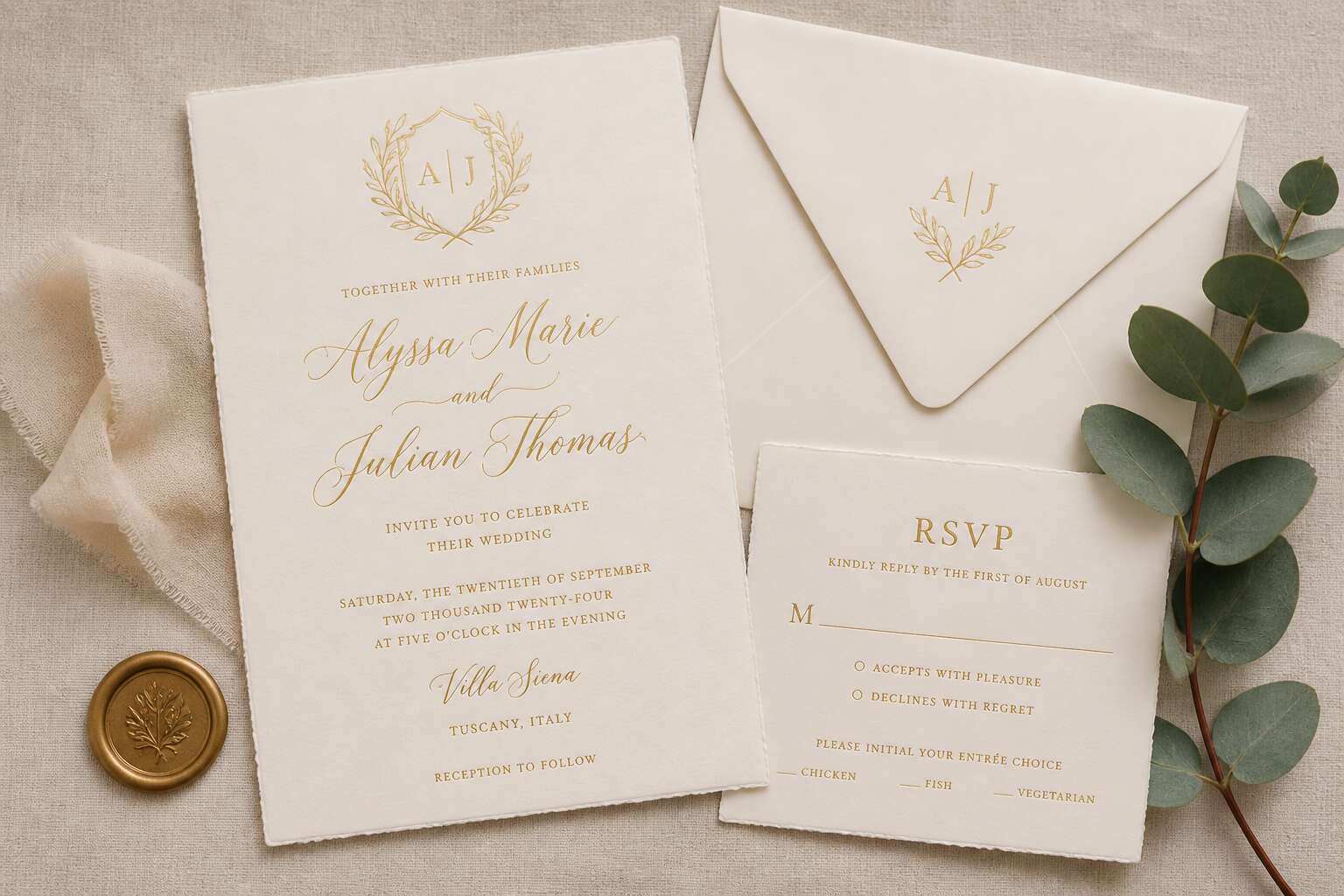
The paper you choose for your wedding invitation and rsvp suite is the handshake before the first hello. It speaks before your guests read a single word. A thick, cotton-based card stock whispers luxury, while a textured, laid finish offers a familiar, artisan feel under the thumb.
Consider the variables that affect both durability and aesthetics.
– Weight: Heavier stock feels substantial and survives the post.
– Texture: Laminate or felt finishes hide fingerprints and add depth.
– Color Base: Pure white is crisp; natural or ivory is warmer.
The right material ensures your wedding invitation and rsvp card feels as good as it looks. It sets a tangible tone for the event, guiding expectations before the venue or menu does. Choose something that reflects your style, but remember it must pass through sorting machines and table counters without losing its character.
Foil Stamping, Letterpress, or Simple Digital Prints
Sixty one percent of guests say a printed invitation feels more personal than an email. That statistic justifies obsessing over the ink. The printing method is the voice of your wedding invitation and rsvp suite. Foil stamping bonds metallic foil to the card, catching light and looking expensive. Letterpress debosses type into paper, creating a tactile impression. Digital printing delivers crisp colours at a lower cost, but lies flat. For bold designs, digital is a smart choice.
For your wedding invitation and rsvp cards, weigh three factors:
- Budget. Foil and letterpress cost more.
- Paper thickness. Letterpress needs soft, thick stock.
- Turnaround. Digital prints are fastest.
These factors overlap in practice. Foil suits geometric designs. Letterpress suits botanical styles. Digital works anywhere. The suite should match the venue. A beach needs lighter options, a ballroom suits tradition. Letterpress may require extra postage.
Coordinating Envelopes, Inner and Outer Setup
An envelope remains the first physical contact a guest has with your wedding invitation and rsvp suite. That initial touch sets a tone before any printing or paper choice is noticed. Outer envelopes absorb the postal journey. Inner envelopes protect the invitation and reveal it in layers.
Coordinate the two with attention to weight, lining, and addressing. The outer layer carries the full name, title, and return address. The inner layer holds only a surname or first name, creating intimacy without a word. Consider this breakdown:
- Outer envelope: full names and titles, return address, postage.
- Inner envelope: recipients’ first names, no postage.
- Assembly: invitation face up, tissue paper on top, inner envelope nesting within the outer.
South African couples often blend tradition with practicality. Coastal weddings may need sturdier stock to survive humidity. City celebrations can use lighter liners. The outer and inner setup is the first promise your wedding invitation and rsvp makes. It signals care before the ceremony begins.
Adding Personal Touches with Wax Seals and Calligraphy
A wax seal is a small ceremony in itself. The melted wax, the pressed monogram, the moment of release. It transforms the wedding invitation and rsvp from a delivered item into a kept treasure. Guests often pause before breaking the seal. That pause is the gift.
Calligraphy works in concert with the seal. Hand lettered names on the inner envelope signal a slower, more deliberate process. It whispers that the couple invested time, not only money.
Consider the practical details:
- Use a soft wax that survives postal sorting.
- Protect the seal with a tissue layer or sleeve.
- Pair calligraphy with a printed body for contrast.
The result is a suite that feels touched by human hands, a quiet promise before the ceremony begins.
Crafting the Wording That Sets the Tone
Traditional vs. Modern Wording Styles
The first impression of your wedding arrives long before the venue lights dim. It hides in the phrasing of your wedding invitation and rsvp. Once your paper and print are set, the words themselves must establish the tone. Traditional wording leans on ceremonial elegance: “request the honour of your presence” or “together with their families.” Modern wording often strips formality to “please come celebrate” or “we are getting married.” Notice the shift in two key directions:
- Formality level: third person versus first person.
- Verb choice: “request” versus “want” or “ask.”
Your selection guides guests on dress code, punctuality, and even the energy of the day. A garden reception with royal court language feels disjointed. A chic urban venue with sloppy shortcuts loses authority. Your wedding invitation and rsvp wording should match your ceremony’s spirit, offering a clear preview of the event to come.
How to Word Invitations for Different Host Situations
The host line determines your wedding invitation and rsvp grammar. In South Africa, many couples host themselves, while others follow tradition. When both families contribute, use “together with their families.” When one set of parents pays, name them first. The wording shifts from “request the honour” to “invite you” depending on who speaks.
- Bride’s parents: “Mr. and Mrs. Sithole request the pleasure of your company.”
- Groom’s parents: “Mr. and Mrs. Nkosi, together with Mr. and Mrs. Botha, invite you.”
- The couple alone: “We warmly invite you to share our day.”
Each version changes the voice. Match the host to the verb. A couple funding their own celebration sounds strange using “request the honour.” Parent-hosted events need the third person. This clarity guides guests before they open the RSVP card, setting expectations for who receives thanks and who answers.
Including the Essential Information Guests Need
The wording on your wedding invitation and rsvp cards signals the mood. A barefoot beach celebration calls for relaxed phrasing. A black-tie dinner in Sandton needs precision and polish. Match the language to the occasion. A garden ceremony in Stellenbosch might read ‘join us for sundowners,’ while a city hall wedding demands sharper formality.
Guests need clarity above all! The date, time, and venue must appear without ambiguity. Your rsvp card should state the reply deadline and include a contact number or email. Meal preferences require a checkbox, not open-ended guesswork. The wedding invitation and rsvp function together; one introduces the event, the other completes it.
Consider the flow:
- Who hosts the occasion
- When and where it happens
- How guests respond and by when
Each element guides your guest from envelope to table.
Etiquette for Addressing Married, Unmarried, and Families
The envelope is the first thing guests touch. It should tell them they matter. The addressing rules are straightforward:
- Married couples with one surname share a line.
- Unmarried partners who share a home get separate lines.
- Children under eighteen can be grouped as ‘The Nkosi Family.’
- Anyone over eighteen receives their own invitation.
These are the rules of social respect. The wording on your wedding invitation and rsvp must match that care. A black-tie dinner in Sandton demands ‘The favour of a reply.’ A braai in Durban can manage with ‘RSVP by the 15th.’ The tone should match the person you are inviting. A formal couple receives formal lines. A laid-back cousin receives a relaxed request. Accurate names and a matching tone finish the job.
Examples of Creative and Formal Wording Templates
Your wedding invitation and rsvp wording acts as a silent introduction. It whispers the vibe of your day before the first course is served. Think of it as a conversation starter. Will your guests expect a string quartet or a live guitarist? The words on the card should not lie about the atmosphere.
Formal affairs call for a specific rhythm. “Mr. and Mrs. Johnathan Dube request the honour of your presence” sets a clear, elegant stage. It speaks of sit-down dinners and crystal glasses. On the other hand, a short, sweet “Join us for the party” feels right for a garden gathering in Cape Town. It promises good music and relaxed vibes.
For a truly personal touch, consider these options:
– “Together with their families, Priya and Thabo invite you to share in their joy.”
– “We’re getting hitched. Come celebrate with us.”
– “Kindly respond by the first of March to complete our seating chart.”
The right phrases create a cohesive experience. Matching the language on your invitation to the expected behaviour is a modern courtesy. Your wedding invitation and rsvp card is a contract of expectations. It tells people whether to prepare a speech or just bring their dancing shoes. This alignment ensures no one feels out of place when they arrive at your venue, whether it’s a vineyard in Stellenbosch or a beach in Umhlanga. The effort you invest here transforms a simple request into a genuine, personal welcome.
RSVP Cards and Response Management Decoded
What to Include (and Exclude) on the RSVP Card
Social researchers note that nearly twenty percent of wedding guests never reply without a follow-up. The RSVP card is essential to your wedding invitation and rsvp. It is a small contract, not a decorative afterthought. Include the response date in bold, a pre-stamped envelope, and specific meal selections. State the exact guest count with blanks like ‘We have reserved ___ seats.’
Here is what belongs on the card:
- Full names of invited guests
- A response date at least four weeks before the wedding
- Dietary requirements or entree choices
Exclude clever poems, lengthy instructions, and links to external sites. A confused guest is a late guest. Keep the card concise, then manage responses with a simple spreadsheet. Clear wording prevents awkward phone calls and keeps your planning calm.
Pre-Printed Selections vs. Blank Lines for Guest Names
Deciding between pre-printed guest names and blank lines on your RSVP card shapes your entire response management. Pre-printed names eliminate ambiguity. A guest named Sarah cannot accidentally bring a plus-one when the card reads “Sarah Thompson.” Blank lines offer flexibility but invite creative interpretation, often requiring follow-up calls.
Consider the practical side of your wedding invitation and rsvp workflow:
- Pre-printed names simplify tracking in your spreadsheet
- Blank lines suit less formal gatherings where guests choose their own companions
- Pre-printed selections reduce errors for older guests unfamiliar with digital replies
Match the method to your guest list. A tight seating plan demands pre-printed accuracy. A relaxed backyard celebration tolerates blank-line openness. Your choice determines whether responses arrive clean or require detective work.
How to Handle Meal Choices and Dietary Restrictions
Meal choices on RSVP cards often feel like a simple logistics question, yet they carry weight. Every guest who ticks the line for sustainably sourced Karoo lamb or creamy butternut ravioli hands you a data point that shapes your venue invoice, your chef’s prep list, and the seating chart. Most couples focus on the number of guests attending. The real work begins when you must reconcile forty beef fillets against two nut allergies and a strict vegan table of eight.
Dietary restrictions are a conversation, not just a checkbox. When you invite a guest with coeliac disease, their gluten free meal needs the same attention as your bridal party’s plated starter. A thoughtfully designed RSVP card includes a space for these notes, so your caterer can adapt the menu without needing a chain of forwarded emails. The quiet cousin who cannot eat shellfish will not volunteer the information unless you ask.
- Match each meal selection to a guest name to prevent swapped plates at the reception.
- Include a clear note about sourcing when you serve game meat or local cheeses.
- Arrange a separate contact point for complex allergies that need detailed conversation.
Your wedding invitation and rsvp suite is the first taste of your reception’s character. A grilled line for “vegetarian, vegan, or pescatarian” gives guests permission to be specific. An open field for “other requirements” collects the real answers, such as a low FODMAP request or a religious dietary law. Expect some guests to write paragraphs. Expect some to write nothing. Both responses are useful to your kitchen team.
Managing meal preferences becomes smoother when you treat the RSVP card as the single source of truth. After the response deadline, compile every meal choice and dietary note into a shared spreadsheet with your caterer and maître d’. This small act prevents the frantic fifteen minute scramble before plated service begins. The couple that manages meal choices with clarity earns a calm dining room and gratitude from every guest who eats safely.
Set a Deadline and Manage Online Responses
Almost 85% of guests check their calendars before they check the weather on the morning your wedding invitation and rsvp card lands in their hands. The date is the contract. The return card is the final signature. Set your response deadline for three weeks before the venue needs final numbers, not four days before. The caterer wants a headcount that does not require a Ouija board to decipher.
Online RSVPs have made the process faster but not necessarily more accurate. A digital form will not stop Great-Aunt Marge from replying “maybe plus one” seven times. Use a system that sends automatic reminders to non-responders, because guilt is a powerful motivator. You can chase the stragglers via WhatsApp, but a polite nudge from an automated email feels less like a hostage negotiation.
– The deadline should be printed in bold on the response card itself.
– Assign each guest a unique code to track their response digitally.
– Keep a separate list for verbal replies, then transfer them immediately.
The real reason to manage online responses is simpler than you think. It shifts the administrative burden off your shoulders and onto a dashboard that your event planner can also see. When you choose a wedding invitation and rsvp suite with integrated digital tracking, you gain a live view of who is coming. That visibility lets you adjust deposits, confirm table rentals, and negotiate the menu before the final invoice cramps your honeymoon budget.
Most South African couples discover that a paltry 45% of guests actually mail back the physical card, even with a pre-stamped envelope. The rest respond through WhatsApp, a phone call to your mother, or a cryptic Facebook comment. Build your digital response form into the wedding website, and keep the link drenched in the same design as your printed stationery. The connection between the paper in the postbox and the pixel on the phone keeps your guest list coherent, and it ensures the last-minute plus-one from your fiancé’s rugby team does not become a surprise dinner.
Modern Invitations: Paperless and Online RSVP
Are E-Invitations as Formal as Print Versions?
Does a screen diminish the solemnity of a wedding invitation and rsvp? Not necessarily. A paperless invite can feel as formal as a printed one when the details signal effort. Consider the difference between a generic email blast and a personalized microsite with RSVP functionality. The former whispers hurry, the latter says ceremony.
Here are markers of a dignified e-invitation:
- A custom URL that reflects your names or wedding date.
- A digital RSVP form styled with your chosen typography and color palette.
- A video message from the couple, embedded near the event details.
Online responses remove the envelope, not the obligation. The medium changes, the etiquette remains.
Best Websites and Platforms for Online RSVPs
Most couples discover that a wedding invitation and rsvp journey now begins with a screen. The paperless route saves time and trees, but choosing the right platform matters. I have tested several services for clients in South Africa, from global giants to local developers.
- Paperless Post blends classic aesthetics with responsive forms.
- Greenvelope offers eco-friendly designs and real time updates.
- Joy centralizes invitations, guest messaging, and seating charts.
Each platform lets you embed a custom RSVP form directly into your page. The best ones sync guest responses automatically, removing the need for manual tracking. A thoughtful digital setup can feel as considered as any engraved card, provided the interface mirrors your stationery palette and font choices!
Hybrid Approach Despite Invites and Better Digital Response
The wedding invitation and rsvp process no longer follows a single path. Hybrid weddings leave a printed card in the mailbox, then guide guests to a QR code for their response. This honours the physicality of paper and the immediacy of a screen.
Couples who handle both print and digital see fewer late replies in our experience. Guests confirm attendance, choose a meal, and note allergies in a single session. The spreadsheet becomes less essential.
Better digital response comes down to three deliberate choices:
- Use one consistent link across every invitation suite.
- Send a polite reminder through WhatsApp or email.
- Keep the ask minimal: name, attendance, meal, message.
Older guests can still write on paper while the rest reply within minutes. Every tracked code and verified envelope keeps the wedding invitation and rsvp flow accurate and timely.
How to Track Digital RSVPs and Follow-Up Automatically
Sixty percent of your guests will decide whether to attend within the first day of receiving your online invite. This makes immediate tracking essential. A paperless system logs every click in real time, showing who lingered on the schedule and who closed the page in seconds.
Your dashboard ranks guests into four groups: confirmed, pending, unanswered, and declined. Automatic follow ups activate at chosen intervals. A gentle email reminder goes out on day five, and a WhatsApp nudge follows on day ten for those still silent.
- Track open rates for every wedding invitation and rsvp link.
- Set automatic reminders based on guest behavior.
- Import unanswered responses into a single follow up queue.
This removes the awkwardness of chasing people. The system does it politely, on schedule, while you focus on seating charts. Some couples report a 90 percent response rate before the deadline. Your wedding invitation and rsvp process becomes self managing.
Keeping a Cohesive Look Across Screen and Paper
Your paperless invitation and your printed card should share a consistent visual language. When guests open the digital link, they should see the same ivory background, the same serif typeface, and the same delicate border. This coherence builds trust before anyone clicks RSVP!
Carry these design tokens across both channels:
- Use identical fonts for names and dates.
- Match the accent colour from your envelope lining.
- Repeat your floral motif or crest in the page header.
A unified aesthetic makes your wedding invitation and rsvp flow feel intentional. Guests encounter the same design language whether they scroll on a phone or hold the card in hand. No sudden shifts, no confusion. Just a coherent message that respects their time and your theme.
Planning the Invitation Mailing Timeline and Post-RSVP Follow-Up
When to Send Invitations and RSVP Deadline Recommendations
Studies show that nearly one in five guests fails to RSVP on time. That is why the wedding invitation and rsvp timeline demands careful planning. Send your invitations six to eight weeks before the wedding. For a destination event or a busy holiday weekend, allow ten weeks. Set your RSVP deadline three weeks before the ceremony. This interval gives you room to chase slow responses and share final numbers with your caterer.
After that deadline, post-RSVP follow-up begins. Contact every guest who has not replied. Use a direct call or a quick message. Keep a checklist to track names and responses. This step prevents last-minute surprises.
Use this sequence:
1. Mail invitations six to eight weeks ahead.
2. Set the RSVP deadline three weeks before the ceremony.
3. Follow up with non-responders within two days.
Tracking RSVP Responses Efficiently Without a Spreadsheet Grief
Some couples treat the wedding invitation and rsvp process like a game of chance. They mail invites when the mood strikes and hope for the best. That approach produces chaos. A timeline keeps you sane.
Work backwards from the ceremony. Six to eight weeks gives guests breathing room. For a destination wedding, stretch it to ten. Then set your cut-off three weeks out. After that, the chase begins. Call, message, or email the stragglers. Keep a simple checklist.
Forget complex spreadsheets. A notebook works. Or a shared notes app. You need names, response status, and meal choices. That is it. Divide the list into two groups:
- Confirmed guests
- Guests who owe you a reply
Update it daily. Follow up within two days of the deadline. Your wedding invitation and rsvp timeline becomes painless. You will avoid the last-minute panic and keep your caterer happy.
Professional Ways to Chase Missing RSVPs etiquette
A wedding invitation and rsvp cycle falls apart without a mailing timeline. Count back from the ceremony, then subtract ten days for printing errors, address corrections, and postal delays. This buffer prevents panic. Most weddings need six weeks. Destination events need eight to ten. Set your reply deadline three weeks out, and mark it on every envelope.
When the deadline passes, act with courtesy. The chase is not an accusation. It is a nudge. Start with a short email or a direct phone call. Say you are finalizing numbers for the caterer.
- Call non-responders directly.
- Keep a polite script.
- Allow a three-day grace period.
Professional follow-up respects your guests’ time and protects your budget. The wedding invitation and rsvp process ends when you thank each responder and close your list.
How to Handle Late Responses and Extra Guests
Planning the wedding invitation and rsvp timeline requires a backward count from your ceremony date. Add a ten day cushion for printing errors, address corrections, and postal delays. Local weddings usually need six weeks, while destination events need eight to ten. Mark your reply deadline three weeks out on every envelope, then wait for responses to arrive.
When late replies surface, contact those guests directly by phone. Say you are finalising numbers for the caterer, and ask for their decision on the spot. Extra guests require a quick check of your venue capacity and seating plan. Adjust meal counts without fuss, and keep a short grace period for stubborn stragglers.
Post-RSVP Cards to Thank Guests and Announcee Changes
A single typo on your wedding invitation and rsvp cards can cost you a week of sleep. Mailing them requires a backward count from the ceremony date. Add ten days for printing errors and postal delays. Send local invites six weeks out, destination invites eight to ten weeks. Mark your reply deadline three weeks before the event on every envelope.
After responses arrive, send post-RSVP thank-you cards within a week. This confirms attendance and keeps guests informed. If you need to announce changes, such as a venue shift or a new dress code, do it promptly. Use a clear email or a note inside the thank-you card!
- Confirm meal choices
- Update seating charts
- Notify vendors of final numbers
These steps make the process less stressful. Your guests feel valued, and you avoid last-minute surprises.



0 Comments