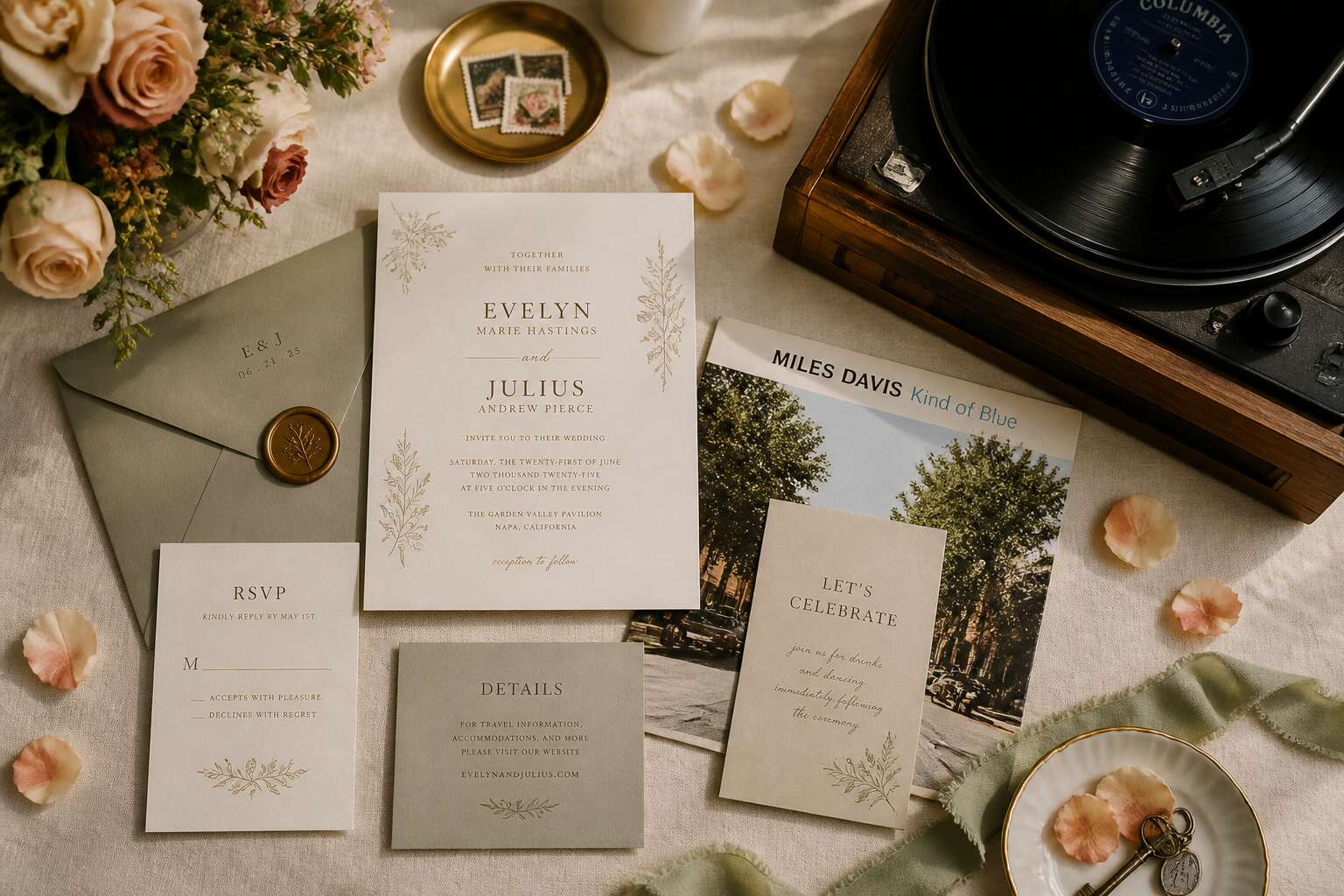
The Role of Music in Wedding Invitations
Setting the Tone for Your Big Day
A 2019 study found that music alters our perception of time, making moments feel longer or shorter. This is precisely why the right soundtrack is critical for your wedding announcement. The song you choose is not a background detail. It is the first sensory experience your guests will have with your event, creating an emotional context before a single invitation is opened.
The melody acts as a sonic handshake. It introduces your personality as a couple before the spoken word can. For a formal evening affair, a classical string piece suggests elegance and restraint. Conversely, a lively Afro-pop track signals a relaxed, celebratory atmosphere where dancing is mandatory. Your choice is a direct message to your guests about what they should expect to wear, feel, and do. I’ve seen couples successfully bridge generational gaps by choosing a classic track that appeals to elders while still holding a modern beat. The goal is to create anticipation, not confusion. If your guests hear a song that feels like “you,” they will arrive with a clearer understanding of your shared taste.
Here are three common routes couples take to achieve this:
- Upbeat and contemporary songs that signal a high-energy party.
- Romantic ballads that emphasize intimacy and connection.
- Instrumental versions of popular songs to add a touch of sophistication.
Think of the track as a trailer for your wedding film. It should highlight the highlights. A mismatched song, such as a heavy metal riff for a garden tea party, can create a disjointed feeling that is hard to shake. The right wedding invitation songs offer a preview of the joy, the seriousness, or the quirkiness you plan to share. This is your chance to align your guests’ expectations with your actual vision, ensuring that the moment they arrive, they already feel part of the story you are telling.
Why Music Matters in Invitation Wording
Sound arrives before sight in every human ritual. When your invitation is lifted from its envelope, the melody reshapes how each word is read. The right wedding invitation songs turn a formal announcement into an intimate confession, a whispered promise that lingers long after the card is set aside.
There is a quiet precision in pairing text with tone. A sombre cello line gives your wording a weight that ink alone cannot carry. A bright, percussive rhythm makes your phrases urgent and alive. The same sentence reads differently beneath different melodies. This is why music matters in invitation wording. I have seen it direct the emotional temperature of every syllable your guests consume!
Consider what your guests should feel encountering your names:
- Anticipation for the ceremony itself
- Curiosity about the celebration that follows
- A sense of belonging to your shared story
Each response is summoned by the song you choose.
How Song Choice Reflects Your Love Story
Every couple carries a private soundtrack. That song from your first road trip, or the track that played while you danced in the kitchen. When you embed that melody into your invitation, you hand your guests a piece of your history. The choice reveals what you value: devotion, mischief, or quiet endurance.
I have watched couples agonise over this decision. They ask which wedding invitation songs feel appropriate. I ask them which song makes them stop mid-conversation. Those are different questions! Invitations carry your names, your date, your venue. The song carries your context. It tells guests why you two make sense. For me, the most memorable wedding invitation songs are the ones where the music makes the words seem inevitable. The right tune moves your story beyond the envelope and into their memory.
Key Factors to Consider When Selecting Tracks
Matching the Mood and Theme of Your Wedding
Three seconds. That is how long your guests need to judge whether your wedding invitation songs align with the venue’s aesthetic. When selecting tracks, the acoustic signature matters more than personal preference! A classical string arrangement fits a vineyard ceremony, while a soulful saxophone complements an urban loft. Tempo dictates movement. Guests pause for a slow ballad or step forward for a driving beat.
Consider the mechanics of sound. The room’s reverb, the speaker placement, and the crowd’s baseline noise alter how the track lands.
- The lyrical density determines whether people listen or converse.
- The original key’s range affects vocal delivery if you plan live accompaniment.
- The track’s cultural resonance will either unify or alienate diverse family groups.
When curating wedding invitation songs, I favor instrumental versions for the walk-in, because dense metaphors compete with spoken words. Save the full vocal for the reception, where the theme can land properly.
Considering the Length and Format of Your Invitation
The average wedding invitation is handled for less than a minute, yet that brief interaction sets the stage for your entire event. When you are selecting wedding invitation songs, the length and format of your invitation should dictate the structure of the track you choose. A traditional printed card offers a static experience, so the song must do the heavy lifting of conveying tone through its opening bars alone.
However, a digital invitation with an embedded video allows for a narrative arc. You have the time to build a musical story that matches the unfolding visuals. The format changes the song’s function entirely.
Consider the practical dimensions of your medium before you commit to a track:
– A short, text-based card requires a track with an immediate hook or recognizable melody.
– A multi-page or video invitation can support a gradual build and dynamic shifts.
– An invitation with a specific cultural or regional theme may call for a traditional instrumental piece.
– A minimalist invitation benefits from a single, clean acoustic line.
The physical act of opening a card or swiping a screen creates a moment of silence. The music you choose should fill that space without overwhelming the text. For a lengthy invitation, a song with too many tempo changes will feel chaotic. For a short one, a slow-building track will feel cut off before it begins.
The goal is to create a cohesive sensory experience where the audio and the written word share the same pace. In my experience, the most successful wedding invitation songs for this purpose are those that respect the invitation’s volume of information. A dense, text-heavy card needs a sparse arrangement. A minimal card can afford a richer production. The track’s volume and intensity should mirror the invitation’s visual density, ensuring the message and the melody land with equal impact.
Cultural and Lyrical Relevance
In South Africa, music carries memory. A wedding invitation song that ignores cultural context can feel hollow, even disrespectful. The lyrics matter deeply. They speak to elders in the room and to the couple’s shared history. When you select wedding invitation songs, consider the languages your guests understand. A Zulu praise song might resonate differently than an Afrikaans ballad. The lyrical relevance should mirror your values as a couple.
Here are a few cultural checkpoints to weigh:
– The song’s original meaning and whether it aligns with marriage
– The dialects or languages represented in your family
– The instrumental traditions that evoke your specific region
Many couples choose tracks with hidden lyrical layers. Those layers create quiet nods for those who listen closely. The best wedding invitation songs honor your roots while introducing your story to new ears.
Popular Genres and Styles for Invitation Soundtracks
Romantic Ballads and Classic Love Songs
Romantic ballads and classic love songs are the most common basis for wedding invitation songs. Their familiar structures and emotional crescendos translate well into short audio clips. Choosing a track like “At Last” or “Can’t Help Falling in Love” gives guests a musical reference point they recognise instantly.
This genre suits invitation soundtracks because it prioritises clarity. The slow tempo leaves room for your voice, and the instrumentation rarely overpowers spoken words. Many couples align the first verse with their invitation text, letting the melody carry the announcement.
Popular choices include:
- Classic soul ballads with brass sections.
- Soft rock love songs from the 1980s.
- Acoustic covers of well-known standards.
The most effective wedding invitation songs in this style keep the arrangement simple and the sentiment direct. For South African weddings, this often means blending local genres like maskandi or mbube with the romantic ballad structure. That combination gives your invitation warmth and a sense of place.
Upbeat and Joyful Tunes for a Celebration
Upbeat tracks bring a different energy to wedding invitation songs. Where ballads invite reflection, joyful tunes announce celebration from the first note. A bright, rhythmic opening tells guests this event will be lively, not solemn. That distinction matters when your audio plays before spoken details.
For South African weddings, the options are rich. Highlife guitar riffs, amapiano log drums, or a kwaito beat tie your soundtrack to something familiar. These genres carry warmth and communal spirit that pop tracks miss. In my experience, the best choices match the reception’s energy.
The length of your audio shapes the decision:
- A 15 second clip needs an immediate hook.
- A 30 second clip can build into the first verse.
- The tempo should never bury your voice underneath the instrumentation.
Joyous music does not undermine the romantic message. Joy is part of love! Matching your relationship’s energy to the sample creates a cohesive invitation.
Classical and Instrumental Pieces for Elegance
Classical and instrumental pieces offer a different kind of gravity for wedding invitation songs. The measured notes of a piano sonata or a solo violin create a ceremonial atmosphere. These works do not rush. They allow each syllable of your names to settle in the listener’s mind. For South African weddings, a string quartet or classical guitar can fill a garden venue with clarity.
Consider these arrangements:
– Solo piano
– String quartet
– Classical guitar
– Harp
Each provides a steady foundation. The instrumentation stays beneath your voice, never competing with it. In my experience, instrumental wedding invitation songs hold a quiet power that feels both intimate and grand. The elegance emerges from the restraint itself.
Acoustic Covers and Indie Gems
Acoustic covers strip a song to its essential elements, which makes them compelling choices for wedding invitation songs. The rawness of a single voice and guitar creates an immediate, personal connection. These versions feel like a quiet conversation with each guest!
Indie artists bring an approachable honesty to familiar melodies. They stretch notes and pause at unexpected moments. This creates space for your names to rest. For South African couples, acoustic tracks evoke the feeling of a sundowner, unhurried and intimate.
The strongest invitations in this style share common traits:
- They prioritise lyrical clarity
- The tempo feels natural, never rushed
- Their intimacy builds anticipation for the ceremony
Acoustic gems work because they sound human. Flaws and breath are part of the texture.
Current Chart-Toppers and Trending Hits
Thirty seconds. That is the average time a guest spends with your invitation. In that narrow window, a chart-topping track can transport them to the dance floor of your reception before the ceremony begins. Current hits carry a collective memory. Most guests know the chorus. Many have played it at a braai.
That shared recognition makes the modern pop anthem a powerful tool for wedding invitation songs. The bassline hums beneath your details. The rhythm section carries your names forward. I have seen South African couples embrace amapiano tracks, where the rhythmic thump of the log drum anchors the celebration.
A trending ballad from a streaming playlist works equally well, its familiarity easing guests into the quiet anticipation of the ceremony. The latest releases preserve this particular moment in your lives. Years from now, the song will summon the memory of your wedding day with startling clarity!
Tips for Seamlessly Integrating Music into Your Invitation
Timing and Transitions for Smooth Playback
Here is a hard truth that will save you from a cringe-worthy moment: your guests will forgive a skipped line in your vows, but they will remember an awkward silence between the chorus and your names. The keenest tip is to treat your musical cue as a stage manager, not a background noise. You need to time the fade so the first chord hits exactly as the text appears, which sounds simpler than it is. Most couples fumble because they choose tracks with a slow build. Your wedding invitation songs should have a definitive start, not a 30 second ambient intro that leaves guests staring at a blank screen.
The technical aspect demands more than just picking a good melody. You must consider the format of your video file and the platform you use. A file that plays perfectly on your laptop might buffer on a relative’s older phone. This is where your transition strategy becomes vital. You have two primary options for moving between the song and the spoken or written sections of your invite:
– Opt for a hard cut at the end of a specific lyric phrase.
– Use a quick fade out, which is safer but slightly less punchy.
– Layer the track under your voiceover, lowering the volume by 20 percent.
If you choose the loop method, where the song replays, ensure the ending and beginning match in key and rhythm. A jarring shift ruins the mood. Personally, I advocate for the understated approach. Let the music dip when the date appears, then swell again for the final reveal. This creates a dynamic without requiring a complex editing suite. Check the export settings and test it on several devices. The magic lies in the precision of the edit, not the length of the song. A tight, well-timed clip of your wedding invitation songs will always outperform a long, meandering mix. It shows you have control.
Volume and Vocal Mix Considerations
Your guests will forgive a shaky camera, but they will not forgive a distorted vocal track. Volume mixing is the quiet work that shapes how people feel. When your wedding invitation songs compete with a narrator, lower the music by about 20 percent. Adjust further if the track has a busy arrangement or a high vocal register.
Here is a practical frame for setting levels:
- Keep voiceover peaks around minus 3 decibels
- Let instrumentation sit near minus 15 decibels
- Check the mix on phone speakers, not just headphones
South African couples often play these videos on WhatsApp, where compression flattens dynamics. If your wedding invitation songs dominate the voiceover, the message gets lost. Listen once with the screen turned away from you. If you cannot catch every word, the mix is wrong. Balance is a matter of respect for the listener, not a technical vanity.
Legal and Licensing Basics for Using Tracks
Seamless integration starts before you press record. Use a high-resolution audio file, not a thrice-forwarded WhatsApp voice note. The audio quality of your wedding invitation songs determines whether they sound intentional or accidental. A crisp WAV file keeps the music present without demanding attention.
Legal basics are less romantic but equally essential. Your uncle’s opinion about the song choice is free. The song itself is not. Using a commercial track in a video invitation requires a sync license. In South Africa, SAMRO and CAPASSO manage these rights. Without clearance, your wedding invitation songs could become a copyright problem.
- Videographers often include licensing in their packages
- Independent artists may grant permission directly
- Proof of license should be kept for your records
Testing Across Different Devices and Platforms
Three out of four guests will watch your video invitation on a phone, not a television. Your wedding invitation songs get judged through a tiny speaker. A track that sounds balanced on studio monitors loses warmth when compressed for WhatsApp, so test every mix on devices your guests actually own.
Send the file to your phone and your partner’s phone. Listen at moderate volume, then low volume, because most viewers don’t watch at full blast. Social media compression differs from direct file delivery, and that affects the audio envelope of your wedding invitation songs.
- Test on Android and iOS to catch codec quirks.
- Listen with and without headphones.
- Check buffering on a slow mobile connection.
These checks take minutes, and they spare you the awkward silence of an invitation that opens muted!
Working with Video Editors or Designers
Handing your wedding invitation songs to a video editor is a transfer of trust. The editor does not merely lay the track under your photos. They sculpt the entire visual rhythm around its dynamics. You can make that process seamless by giving them context. A single paragraph about the moment you first heard the song, or the way it makes you feel, is worth more than a hundred screenshot annotations.
In South Africa, where connection speeds vary widely, share files with a service that lets the editor preview in low resolution before export. Discuss the audio envelope early. Ask them to mark the exact second where your names appear, so the music breathes at that instant. A shared timeline with comments, rather than scattered WhatsApp voice notes, keeps the workflow coherent. When the editor understands your intention, the synchronisation feels inevitable. The invitation opens with purpose, not hesitation.
Creative Ideas to Make Your Invitation Stand Out
Combining Song Lyrics with Visual Storytelling
Pairing a lyric with a visual frame turns an invitation into a cinematic moment. A line like “take me to the rivers” gains depth when the background shows the Cape Winelands at dusk. Your wedding invitation songs become the central narrative.
Typography should mimic the song’s movement. A slow ballad benefits from serif letters that drift across the page, while an upbeat track calls for staccato blocks. Make the viewer feel the tempo before pressing play!
- Overlay lyrics on a map of the venue where you first danced.
- Animate the text to arrive with the beat.
- Use a muted colour palette from the album cover.
This technique works best when visual and audio share the same emotional temperature. A mismatched pairing, like a sombre lyric over a beach photo, feels disjointed. I’ve seen South African couples weave local dialects into it, adding a layer of meaning for guests who know.
Adding Interactive Elements with Music
A wedding invitation is no longer a static announcement. It is a memory you send ahead of yourself. If you have already chosen the track, the next step is to make it impossible to ignore. Interactive elements turn a passive viewing experience into a deliberate engagement. A simple QR code printed on the card can lead to a private Spotify playlist, but the real magic happens when you embed the music directly into the digital invitation itself. The moment a guest opens the file, the first few bars should play automatically, setting the emotional landscape before they read a single word.
You can push this further by letting the song react to the guest’s behaviour. A scroll-triggered animation can reveal different verse snippets as they move down the page. Alternatively, a muted audio toggle gives guests control. In South Africa, where load shedding remains a reality, consider adding a downloadable MP3 version alongside the video link. Here are a few practical features to explore:
– A silent autoplay feature that activates on tap, avoiding mobile data surprises.
– A lyric pop-up that aligns with the chorus when the guest clicks a specific date.
– A progress bar that reveals the venue details as the song plays.
The most compelling invitations treat the music as a physical object. Let the beat dictate the visual pacing. If you have a track with a strong percussive intro, time the text entrance to coincide with the drum hit. This creates a mnemonic connection between the sound and the information. It transforms the logistics of your wedding, the venue and the date, into something they will remember because of the song that accompanied them.
Seasonal and Thematic Song Suggestions
Choose a wedding invitation song that responds to the calendar, not only the venue. An autumn ceremony in Stellenbosch pairs with a track that uses a slower decay on strings. For a summer wedding in Durban, look for a brass section with a sharp attack. The December wind along the coast needs a recording that captures air movement.
Guests remember the first note more than the date. A coastal invitation that includes ocean sounds reinforces the location. A Highveld winter theme works with a solo piano piece where the rests carry tension. You can adjust by province.
- Autumn: folk songs with acoustic guitar.
- Spring: light string arrangements and bird samples.
Let the season set the tempo. A Johannesburg summer track feels quicker in the higher register. A Karoo sunset calls for a slower BPM. These wedding invitation songs prepare guests for the environment they are entering.
Collaborating with Musicians or Bands
Most couples press play on a recording. A smaller number ask a musician to perform the invitation itself. A live guitarist strumming your wedding invitation songs while the camera pans across Table Mountain creates something no app can replicate. You get breath, movement, and the quiet imperfections that make a track feel real.
Collaborating with a band works best when you give them room to interpret. Send them the story behind your song choice. Let them adjust key changes or add a marimba phrase. Trust their ear.
For a polished result:
1. Book a session at a recording studio with ambient microphones.
2. Request a raw take with no overdubs.
3. Ask the musician to appear on camera playing live.
The result is a keepsake you will replay for years.
Creating a Musical Medley or Mashup
A medley condenses your relationship soundtrack into a single evolving piece. Splice 20 seconds of your first dance with 15 seconds of the song from your first road trip. You create a translation of your story that no single track can capture. Most couples avoid this because they fear jarring transitions. The solution is key matching. Find two tracks in the same key, or ask a studio editor to shift one. South African producers excel here, bridging kwaito, gospel, and classical influences without friction.
For your wedding invitation songs, structure the mashup in three parts:
- Open with a sparse verse, vocals only
- Transition into a percussion-driven bridge
- Close with the full chorus as your names appear on screen
I have seen this approach turn an ordinary invitation into a cherished artefact of a couple’s journey. The result feels intentional, because it is. It rewards couples who trust their narrative enough to let it breathe.
Using Soundtracks to Announce the Date and Venue
Your wedding invitation songs can carry more than emotion. They can deliver the practical details your guests need to plan their journey. Consider hiding the date and venue inside the arrangement itself. A soft chime or a shift in tempo can signal that important information is coming. Then display the words on screen as the music swells.
For a truly inventive approach, use the rhythm of the track to mirror your travel plans.
- Select a song with a road trip feel if your venue is a scenic drive away.
- Use a track with ocean sounds to hint at a coastal ceremony.
- Choose a kwaito beat to celebrate a city venue in Joburg.
Your guests will remember the date and the feeling of arriving. When choosing wedding invitation songs, think of them as a spoken invitation with a melody.


0 Comments