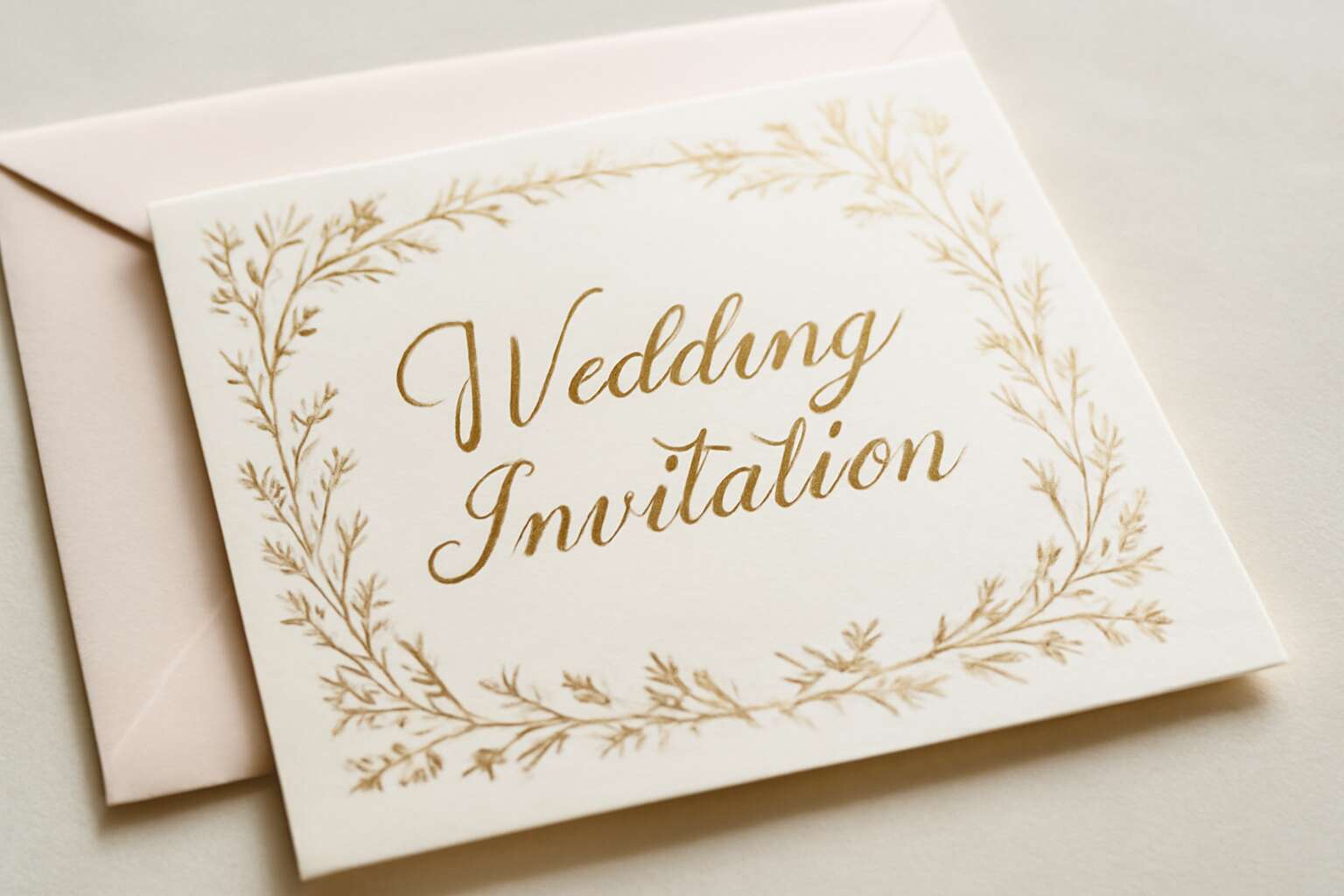
Front Page Design Essentials
Visual hierarchy and layout for wedding invitation front pages
“First impressions are written in ink!” and that line nails the power of the wedding invitation front page. In South Africa, guests decide their mood in seconds, so the page you present must carry elegance, clarity, and a hint of personality from the moment it lands on the mat.
Visual hierarchy and layout are not afterthoughts; they are the blueprint for communication. Lead with the couple’s names as the focal point, let dates and venues fall into secondary but readable tiers, and use generous margins to keep the design breathable.
- Dominant focal point—names or monogram as the defining element
- Clear typographic hierarchy—size, weight, and contrast that guide the eye
- Balanced margins and white space—breathing room for legibility
Color, texture, and print method should support the message rather than fight it, and the front page should read well both in person and online previews. The wedding invitation front page embodies the tone of your day—make it count.
Color palettes that set the tone for the wedding
The wedding invitation front page sets the mood instantly. Colour palettes do more than dress the page; they whisper the day’s tone in a blink, especially under South Africa’s radiant light where legibility and warmth must coexist.
Consider these palette archetypes to guide your choice:
- Ivory, champagne, and soft taupe for timeless elegance
- Sage, blush, and gold for gentle romance
- Navy, pewter, and ivory for modern drama
Textures and print methods should not fight the colour; they should harmonise to carry the mood, ensuring the front page reads well in print and on previews.
Typography choices on the front cover
Typography on the wedding invitation front page is the first handshake guests feel before the RSVP lands. Choose a primary typeface with personality but legibility first—refined serif for timeless warmth or a clean sans for contemporary punch. Pair it with a subtle secondary for names and essentials, but avoid three families that clutter the breath of the page. In South Africa’s bright light, test readability at print sizes and previews—trust me, legibility and charm should coexist.
- Limit to two type families to maintain rhythm and readability.
- Reserve script or decorative accents for initials or small details.
- Balance type weight with your printing method to keep elegance intact.
Typography should align with margins and textures; a bold weight can anchor a minimalist palette, while a slender script can whisper romance! Final polish comes from careful kerning and a touch of foil or letterpress to give the front page a tactile signature.
Embellishments and textures for elegance
Elegance hides in the grain of the paper, and the front page of a wedding invitation is where texture speaks before a word lands. In South Africa’s bright light, foil accents, linen textures, and vellum overlays can command attention without shouting. Balance embellishment with breathing room to preserve legibility and grace.
- foil accents that catch the light
- embossed or debossed textures for depth
- vellum overlays or silk ribbons for quiet movement
Pair these touches with restrained margins and a print method that respects the page’s rhythm—foil, letterpress, or a soft ink lift—so the front page reads as an invitation to linger, not rush.
Typography and Content on the Front Page
Choosing fonts for readability and style
Typography is the first handshake on the wedding invitation front page, and in South Africa, the typeface signals mood long before the RSVP arrives. A bold display can shout joy; a quiet serif suggests timeless grace—and both should invite the eye to linger!
Readability leads the conversation; style follows. Pair a readable serif or a crisp sans for body copy, then reserve a flourish—perhaps a script name—for emphasis. The front page should respect contrast, spacing, and rhythm as guests skim at a glance.
- Serif body with a sans headline for contrast
- Script used sparingly to highlight names
- High-contrast color on a light ground for legibility
On the invitation, typography speaks a subtle, gracious language that hosts a moment before the celebration begins. When letters align with rhythm and readability, guests feel welcomed without needing a glossary of etiquette.
Incorporating couple names and wedding details
That initial moment, when the wedding invitation front page meets a guest’s gaze, tells a story before the vows are spoken. In South Africa, it whispers mood and hospitality in a heartbeat.
Typography guides the eye with quiet authority. Naledi and Thabo deserve a front page that feels like a welcome at the gate. A serif body with a crisp sans headline creates contrast; script names add warmth, but sparingly; high-contrast color on light ground keeps legibility intact.
Keep these essentials on the front page:
- Naledi & Thabo — names styled with script for a warm introduction
- 12 December 2026, 15:00 • Boschendal Farm, Stellenbosch — venue and time, clearly stated
- Reception follows at 17:00 in the same estate
On the page, readability and rhythm host the moment, guiding guests with grace toward the celebration that awaits.
Call-to-action and RSVP cues on the front
Typography on the front page should direct the eye with quiet authority. A crisp sans headline anchors the RSVP cue, while a serif body keeps the page readable and inviting. That wedding invitation front page should feel like a warm welcome, not a label.
Place a bold call-to-action near the lower third. Ensure contrast on a light ground for legibility, and keep the text concise. Consider these CTA cues:
- RSVP deadline clearly stated
- Response options: website, email, or SMS
- Include a URL or QR code next to the CTA
In South Africa, a succinct front-page RSVP cue respects time and space, guiding guests toward the celebration!
Branding Your Event Through the Front Page
Designing a cohesive invitation suite
In South Africa, the wedding invitation front page often doubles as a brand handshake with guests. The first impression sets the mood long before RSVPs arrive! A respected local designer says, “The first page is a handshake in ink.”
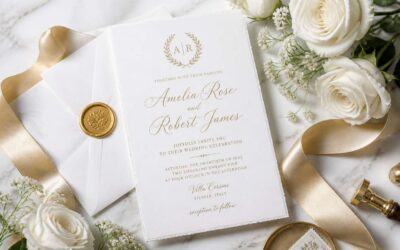
Branding your event through the front page means weaving story, tone, and texture into one cohesive suite. I love how a timeless monogram, a restrained finish, and a weighty paper that feels right in the hand become the talking point. Consider these essentials:
- Monogram and crest tell the couple’s story
- Uniform paper stock and finish across cards
- Foil, embossing, or watermark for subtle elegance
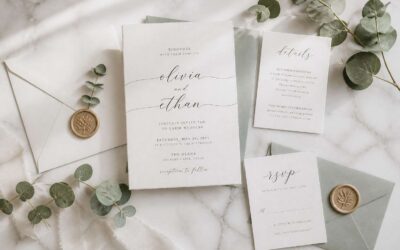
When the front page speaks with the rest of the suite—the invitations, save-the-dates, and RSVP cards—the branding feels inevitable, a promise echoed in paper and craft. The wedding invitation front page should beckon guests to dream of the day and setting, from city skylines to coastal light.
Using motifs and symbols to reflect wedding theme
South Africa’s weddings carry a hush of rain on granite, and the wedding invitation front page is the brand handshake guests encounter long before RSVPs drift in. “The first page is a handshake in ink,” declares a local designer. It sets the mood for a day steeped in memory.
Branding through motifs and symbols becomes a whispered narrative: crest for lineage, compass for journey, and fern for endurance, or a coastal skyline for the setting. Consider these reflections:
- Crest and monogram as an emblem
- Compass for journey
- Protea or fern for place and growth
- Coastal skyline or city silhouette for the setting
Let the front page speak to the rest of the suite—the save-the-date, RSVP card, and envelope liner—so the story feels inevitable, a promise echoed in paper and craft. A restrained finish and weighty stock carry the mood from first glance to the day itself.
Incorporating logo or monogram
Three seconds is all it takes for a guest to form a first impression, and wedding invitation front page is the brand handshake that opens the day to come. In a field thick with spectacle, a restrained logo anchors the story in ink and texture.
Its rhythm should echo through the suite, guiding the eye from save-the-date to envelope liner with authority. The wedding invitation front page is a mark that speaks of lineage, journey, and place without shouting, leaving room for the day to unfold with grace.
Design nuances to consider:
- Placement and scale so the mark remains legible on all papers
- Monogram styling that harmonizes with typography and imagery
- Texture and ink choice that elevate rather than overpower
In the end, the front page becomes a doorway into the day, a whisper of what’s to come, a promise carried in paper and craft under South African light.
Slimming down copy for impact
Three seconds—that is how long a first impression lingers. The wedding invitation front page is the brand handshake that opens the day to come, a restrained beacon in a field thick with spectacle.
Branding through this page means a tone that travels through the suite like a measured thread: it speaks of lineage, place, and promise without shouting. In South Africa’s light, the front page becomes a doorway rather than a curtain, inviting curiosity without revealing all.
- Tone that lingers beyond the envelope
- Texture and ink that stay legible yet alive
- Proportion that guides the eye toward what matters
Let the front page be a whisper of what’s to come, a doorway carved in paper and craft under South African light.
Accessible design considerations
A candid stat bite: 52% of guests decide within three seconds whether a wedding invitation front page deserves a second look. Branding your event through the front page is the opening verse of a day steeped in light and shadow, a doorway rather than a curtain in South Africa’s vibrant spectrum.
Accessible design considerations ensure the message travels clearly: legible type, generous line height, and high contrast let the story breathe for every guest. Let the account of place and promise be readable at a glance—no shouting, just assured presence.
- High-contrast typography with ample letter spacing
- Readable sizes and generous line height for quick scanning
- Color as a supplement, not the sole cue to meaning
Let the front page be a doorway carved in paper and craft under South African light, a whisper that invites curiosity toward the rest of the invitation suite—the branding of your entire event, yet never louder than the front page deserves.
Printing and Material Considerations for the Front Page
Paper choices and finishes
The tactile promise of the wedding invitation front page sets the tone before words even land. Choose a paper that feels like your day. In South Africa’s print shops, you’ll find a spectrum from cotton rag to refined board; the choice shapes color, weight, and durability. It’s more than a look—it’s a memory you can hold.
- Cotton rag stock, velvet-soft feel, 300-350 gsm
- Premium wood-pulp bright white, smooth surface, 300-340 gsm
- Recycled or handmade textures for rustic themes, 260-300 gsm
Finishes complete the vibe. Matte or soft satin raises legibility, while gloss can sharpen color. Foiling, letterpress, or embossing add depth without crowding the design.
Printing techniques and cost considerations
A brisk seven-second impression sets the tone for the wedding invitation front page, and in South Africa that heartbeat guides every choice. The right printing can whisper your theme before a single word is read: letterpress for depth, foil for a sly glint, or digital for practical budgets.
Consider these methods and how they shape aura and cost:
- Letterpress: deep, tactile impression; premium feel
- Foil stamping: metallic shine; restrained palettes; higher cost
- Embossing/debossing: sculpted depth without ink
- Digital printing: quick, budget-friendly for small runs
Cost considerations hinge on run length, stock, and finishing. Local South African printers balance polish with practicality: letterpress and foil bring luxury but lift the bill, while digital printing keeps a predictable path for larger quantities and quicker turnarounds.
Sustainability and eco-friendly options
The wedding invitation front page must speak softly, a prelude before vows are spoken. In South Africa, where first impressions ride the wind from Cape Town to the Karoo, a single touch can set the wedding tone. “Sustainability is the true luxury,” a South African designer reminds us, and the page listens with reverence.
Choose materials that breathe: FSC-certified or recycled stock, or tree-free options like seed-paper for a quiet green echo. Inks matter too—vegetable-based and soy-based formulations keep VOCs low, while water-based finishes invite tactile warmth without glare. The front page should whisper, not shout.
- FSC-certified or recycled stock
- Vegetable- or soy-based inks
- Water-based coatings or minimal finishing
In South Africa, local printers balance polish with practicality, trimming waste through thoughtful run lengths and energy-conscious processes. Sustainable choices—seeded papers, responsibly sourced fibres, and modest embellishments—shape the wedding invitation front page into a keepsake that respects both artistry and the planet.

0 Comments