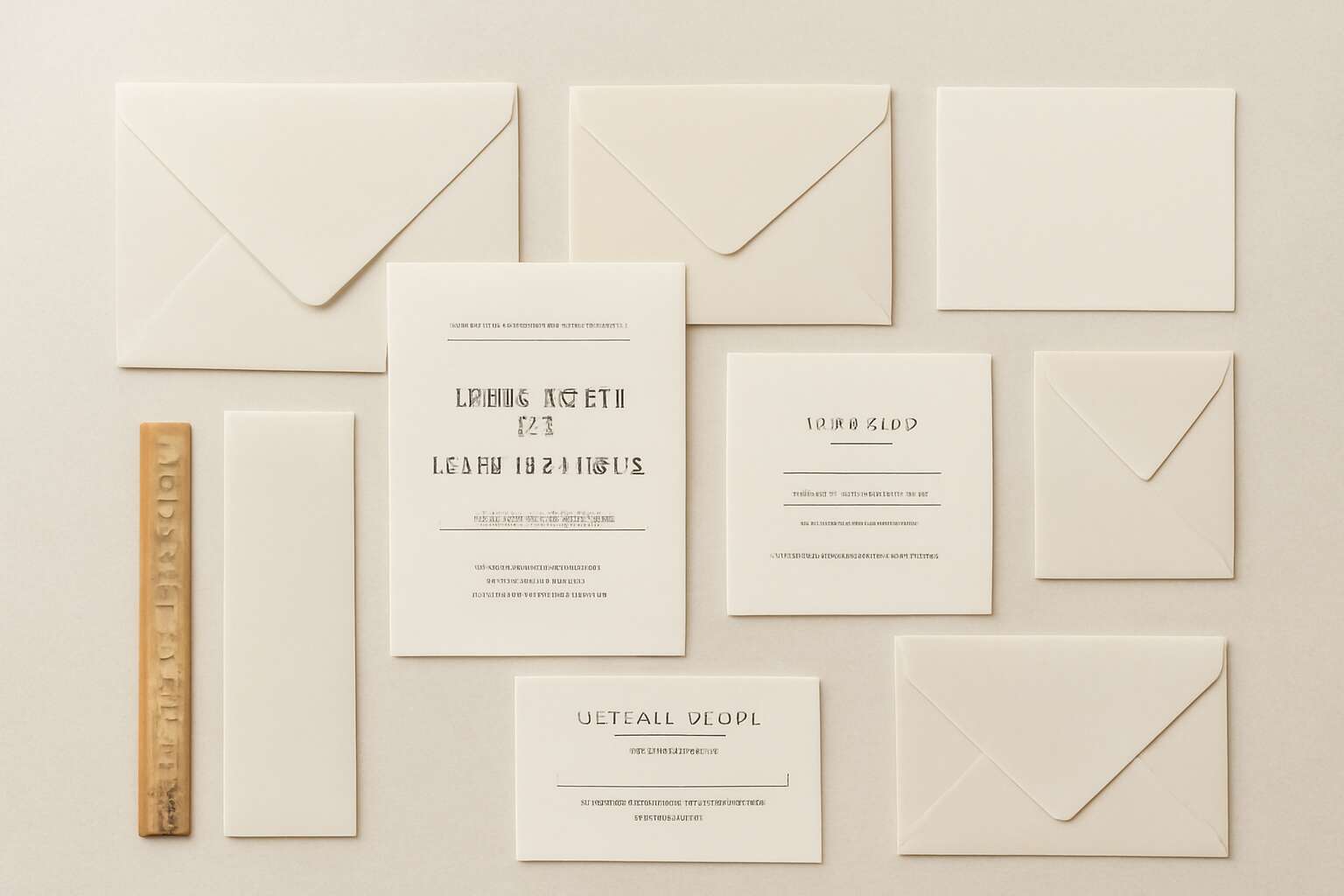
Choosing Standard Formats and Sizing for Invitations
Traditional square and rectangular sizes
First impressions travel faster than confetti, and the wedding invitation size sets the tempo for the entire celebration. In South Africa, traditional square and rectangular formats still rule, marrying timeless charm with practical postage. When you consider the wedding invitation size, think about how the card lands on a guest’s desk and survives a Cape wind in transit.
Here are standard formats that stay stylish and postage-friendly:
- Rectangular: 5×7 inches (127×178 mm) — classic and reliable
- Square: 6×6 inches (15×15 cm) — bold and contemporary
- Compact: A6 size (105×148 mm) — petite yet elegant
Envelope compatibility matters: keep margins generous, and pick a printer who knows SA postal guidelines. The right combination of format and size keeps your theme cohesive from the moment the envelope is opened.
Envelope compatibility and margins
In South Africa, first impressions travel faster than a Cape wind—nearly 60% of guests form their initial vibe about a wedding invitation size within three seconds of lifting the envelope. The choice of format then threads the entire celebration, from tone to typography, with ease.
Choosing standard formats and sizing means letting the envelope do some of the storytelling. A thoughtfully sized card lands softly on a desk, harmonising with the invitation suite and the venue’s mood, while still staying practical for postage and handling in SA.
To keep things cohesive, consider these elements:
- Envelope compatibility with local postal guidelines
- Margins that frame text and motifs without crowding
- Typography and imagery that scale gracefully across formats
When you align the wedding invitation size with your theme, the moment of opening becomes an overture to the celebration.
Mixing sizes for a cohesive suite
Three seconds—it’s all a guest needs to size up the vibe of your invitation. In South Africa, nearly 60% form their first impression the moment they lift the envelope. That makes the wedding invitation size the prologue that sets the tone before any words are read.
Choosing standard formats and sizing lets the envelope lead the narrative while you stay stylishly practical. Mixing sizes across the suite creates a cohesive rhythm that echoes your theme and delights the eye.
- Echoes in shape and proportion across pieces
- Subtle motif scaling for legibility
- Consistent typography that breathes across formats
Let the format carry the mood from first glance to the first dance.
Non-traditional sizes you can consider
In South Africa, roughly 60% of guests decide their impression the moment the envelope is lifted, making wedding invitation size the prologue of your day. That first moment should whisper your intent before a single word is read.
Beyond the standard formats, non-traditional sizes offer dramatic rhythm and tactile delight.
- Tall vertical invites (slim A7 or DL alternatives)
- Gatefold or pocket-fold designs that reveal a layered narrative
- Accordion or booklet layouts for a story-like sequence
- Die-cut silhouettes that echo your motif
Pairing these with thoughtful typography and imagery keeps the wedding invitation size cohesive with the rest of the suite.
Standard Invitation Sizes by Style
Classic and formal invitation sizes
Classic invitation suites lean into proportion and ceremony; the wedding invitation size speaks before a single word is read. For a timeless, formal vibe, the traditional rectangle—often 5×7 inches—offers generous space for typography, borders, and elegant embellishments.
Common standard sizes for classic and formal invitation styles include:
- 5×7 inches (127×178 mm) — timeless, formal base
- 4.25×5.5 inches (108×140 mm) — compact, economical option
- 5.5×7.5 inches (140×191 mm) — slightly larger, luxe feel
Larger formats such as 6×9 inches command attention, while a compact 4×6 can suit minimalist elegance.
Minimalist and modern sizes
In South Africa, couples allocate roughly 3% of their wedding budget to invitations—a statistic that underscores how finely tuned this detail can be. The wedding invitation size becomes a whisper before the first word is read, shaping mood and anticipation.
Minimalist formats celebrate restraint: white space, precise typography, and a quiet elegance. For the wedding invitation size, 4×6 inches (108×152 mm) and 4×5.25 inches (105×133 mm) provide clean lines and cost efficiency.
- 4×6 inches (108×152 mm) — crisp, economical, and universally adaptable
- 4×5.25 inches (105×133 mm) — ultra-slim, contemporary edge
- 4×7 inches (102×178 mm) — taller, restrained drama
Beyond minimalism, modern sizes experiment with proportion and geometry. Consider 6×9 inches (152×229 mm) for a gallery-like statement, or a square 6×6 inches (152×152 mm) for crisp symmetry. Taller formats such as 4×9 inches (102×229 mm) create a striking line that feels editorial.
- Visual impact that sets the tone for the collection of stationery
- Typography balance and room for expressive fonts or borders
- Flexibility to mirror a modern or minimalist wedding aesthetic
- Practical considerations that harmonize design with mailing and presentation
Vintage-inspired dimensions
In South Africa, vintage-inspired sizes top the list for ornate borders and script, with the 5×7 inches canvas a timeless favorite among couples seeking classic elegance.
- 5×7 inches (127×178 mm) — traditional and lush
- 5×5 inches (127×127 mm) — retro square charm
- 4×9 inches (102×229 mm) — tall, vintage elegance
In practice, these vintage dimensions respect envelope margins and ensure legible typography, aligning with South Africa’s preference for refined restraint and the overall wedding invitation size.
Statement larger formats
The invitation is more than paper; it is a doorway to memory. A Cape Town designer reminds us, “The invitation should announce the story before the words arrive.” I’ve seen how a larger format can set the mood at first glance, inviting guests to linger before the RSVP.
Standard sizes by style statement in larger formats include:
- 6×9 inches (152×229 mm) — broad, cinematic presence that fills a frame
- 7×7 inches (178×178 mm) — modern square with quiet drama
- 8×10 inches (203×254 mm) — grand, gallery-worthy scale that commands attention
These options maintain readability and elevate the ceremonial texture, resonating with a South African appetite for refined grandeur. For couples seeking a bold wedding invitation size, these formats promise presence without overpowering the text.
Sizing for Invitation Components
Main card dimensions and bleed area
Your invitation’s footprint is more than decoration; it’s the first signal of your wedding vibe. In South Africa, that first impression travels fast. A recent industry survey found that guests form an impression in seconds, long before they read the details, simply by the card’s scale and readability. When we talk wedding invitation size, the main card is the anchor.
Choose a main card that feels generous but balanced. Classic options include 5×7 inches (127×178 mm) with a 3 mm bleed on all sides to allow trimming. If a more intimate look is desired, a 4.25×5.5 inch card (about 108×140 mm) with the same bleed works well. Bleed keeps art and color from edge to edge.
- Live area shows where text stays within trim lines for readability
- 3 mm bleed ensures art and color extend to the edge
- Printed designs align with wedding invitation size for a cohesive suite
RSVP card and RSVP envelope sizing
In South Africa, the RSVP card often acts as a mood barometer—and a recent survey found guests decide their impression in seconds, long before the handwriting proves legible. When we talk wedding invitation size, the RSVP element carries as much personality as the main card. A compact 3.5×5 inch RSVP card with a light bleed keeps space for a short reply and a return address, while staying easy to mail.
- Clear legibility and whitespace
- Envelope sizing that accommodates both card and reply
- Space for a personal touch, such as initials
Pairing RSVP and main invitation sizes creates a cohesive suite that still feels intimate when opened by guests.
Reception card and insert sizing
In a world where guests decide their impression in seconds, the reception card often speaks louder than its size. For South African weddings, this tiny panel shapes the wedding invitation size and sets the tone before the RSVP lands!
Standard reception sizes sit at 4×6 or 5×7 inches, chosen to complement the main invitation and maintain legibility. I love how the balance of a 4×6 achieves elegance while preserving margins and typography, ensuring the overall invitation size reads as a cohesive suite.
- Match the main card’s scale for a unified look
- Preserve whitespace so crucial details aren’t crowded
- Choose a font that remains legible at the selected size
Done well, the reception component feels intimate when opened—a quiet invitation to the celebration.
Printing Methods and How They Influence Size
Letterpress margins and ink spread
Margins do more than frame text; they whisper the tempo of your wedding invitation size. In SA studios, letterpress margins tighten the impression, guiding ink flow with measured restraint, while the stock’s absorbency choreographs the final spread. A thoughtful pairing of size and method can make script feel intimate or bold, turning the first glimpse into a promise—tangible, tactile, unforgettable. I watch that dialogue between ink and card as guests lean closer.
- Letterpress: deep impression, crisp edge, best with thicker cottons
- Digital and offset: clean edges, even ink, versatile for colored palettes
- Engraving or foil: refined texture, subtle sheen, needs generous margins
When you weigh printing methods against the chosen size, you unlock a nuanced elegance that resonates through the full suite of stationery. It isn’t merely about fit; it’s about letting the ink breathe and the margins speak in your chosen language!
Digital printing with edge-to-edge options
A recent industry whisper claims that guests form their first impression of a wedding in the first 30 seconds of handling the invitation. That moment is shaped by printing method and the wedding invitation size, a dialogue as intimate as the ceremony itself.
Digital printing with edge-to-edge options creates clean edges and even ink across a palette—from sunlit creams to jewel-toned blues—without the premium heft of more labour-intensive methods. It’s a practical choice for South African couples seeking modern flair with reliable color reproduction.
- Edge-to-edge coverage on thick cotton or heavyweight matte stock
- Vibrant, consistent color management across light and dark hues
- Fast turnaround and cost-effective options for busy planning timelines
When you balance digital edges with bleed and margins, the wedding invitation size becomes a canvas where ink breathes and form finds its rhythm.
Die-cut and custom shapes implications
In the pocket of a guest’s memory, the first glance of an invitation is a moment where printing method and wedding invitation size converse in a single breath. The choice communicates intention before a word is read, guiding weight, edge, and silhouette. That first touch speaks louder than you think.
Die-cut and custom shapes become narrative devices only when the size can accommodate the cut. Some methods handle delicate, intricate edges better, while others demand simpler contours to maintain legibility and postage.
- Scalloped edges
- Shield silhouettes
- Banner profiles
For South African couples, this balance translates into a suite that travels well and feels intimate in person. I’ve watched how the scale invites tactile exploration without sacrificing practicality.
Enclosure layers and thickness considerations
Two seconds is all it takes for a first glance to register the weight and intention of a wedding invitation. In South Africa, printing methods must speak quietly but decisively, because the edge and the enclosure do the talking before the RSVP card does. The choice of method—letterpress for tactility, digital for edge-to-edge clarity, or foil for a glimmer—pulls the size into a cooperative relationship with thickness and layers in play. All of this circles back to wedding invitation size, the metronome of the suite. I watch as the layers settle and the envelope closes.
Printing methods and size enclosures demand balance:
- Core card weight that supports the cut
- Envelope liner combinations that add or reduce thickness
- Adhesives and folds that shape final height
With this in mind, your invitation reads as a crafted gesture, even to a guest who savours a well-made card.
Color and font legibility at different sizes
Every whisper of ink carries a promise, and the size of your invitation shapes that promise before a guest reads a word. In South Africa, printers speak with quiet authority—the edge, the bleed, the weight all announcing intent ahead of the RSVP. The dance around wedding invitation size sets the tone for color and font balance.
Printing methods sculpt the message: letterpress offers tactile warmth and a forgiving ink spread at generous scales; digital printing delivers edge-to-edge clarity for small scripts; foil adds glimmer, yet can narrow contrast when overused on fine type.
- Letterpress: tactile depth and warm ink, best at larger sizes to keep legibility generous.
- Digital: crisp edges and consistent color, ideal for small body text and precise alignment.
- Foil: shimmer that highlights details, use sparingly so contrast remains readable.
Let size guide the choice, and let the method carry the tone across the suite and envelopes.
Practical Planning: Budget, Timelines, and Size Decisions
Cost implications of different sizes
Size sets the tone before a single word is read. A designer once said, “The first impression travels through fibres and ink.” In practical terms, the wedding invitation size can tilt budgets, extend timelines, and steer production choices. Nail the balance, and the invitation suite feels cohesive and effortless.
Budget and timelines drive how large or small the invitation feels. For the wedding invitation size, plan around print method, envelope fit, and mailability as a trio. In South Africa, printers and postal rates influence size choices. A simple option often reduces risk and cost; a quirky shape may require extra handling.
- Postage implications of non-standard sizes
- Bleed, trim, and setup waste in changeable runs
- Envelope compatibility and inner messaging space
Approach hinges on timing, margins for bleed, and the realities of bulk mailing. The right size supports legibility and helps the entire suite glide through post offices with a crisp first impression.
Lead times for custom dimensions
Size is the quiet negotiator in your wedding story, shaping mood long before the guests read a word. The wedding invitation size can tilt budgets and timelines, even in a market where every gram matters. In South Africa, printers and postage rates react to the dimensions you choose, turning a single choice into a measurable ripple across the suite.
Lead times for custom dimensions stretch beyond standard orders, demanding early alignment with your print method and envelope philosophy. In practice, this means proofs and patience—without losing sight of mailability and the way the card sits in the postbox. The realities are the same wherever you are: the size you select sets pace and expectations.
Budget and timelines become the compass here. A carefully chosen size allows the suite to flow with ease, while leaving room for the inevitable tweaks that weddings require. When numbers align with production reality, the invitation lands with a crisp first impression and a quiet, lingering confidence.
Packaging and shipping considerations
Vendor alignment: ensuring size matches print specs
Across South Africa, 68% of couples say the invitation size is the first clue to the ceremony’s mood—a whispered omen before ink meets card. Practical planning, then, must thread budget, timelines, and size decisions with as much care as the ceremony itself.
We align with printers and stationers early to ensure the wedding invitation size fits print specs, envelope openings, and your chosen stock. A clear budget keeps expectations honest; strict timelines guard proofs, approvals, and finalities, so the design breathes!
- Budget balance across stock, ink, and postage
- Proof timelines that honor production days
- Envelope and print-spec harmony for every size
Let the size be a lantern rather than a cage—guiding the suite with unity while remaining true to the couple’s story.

0 Comments