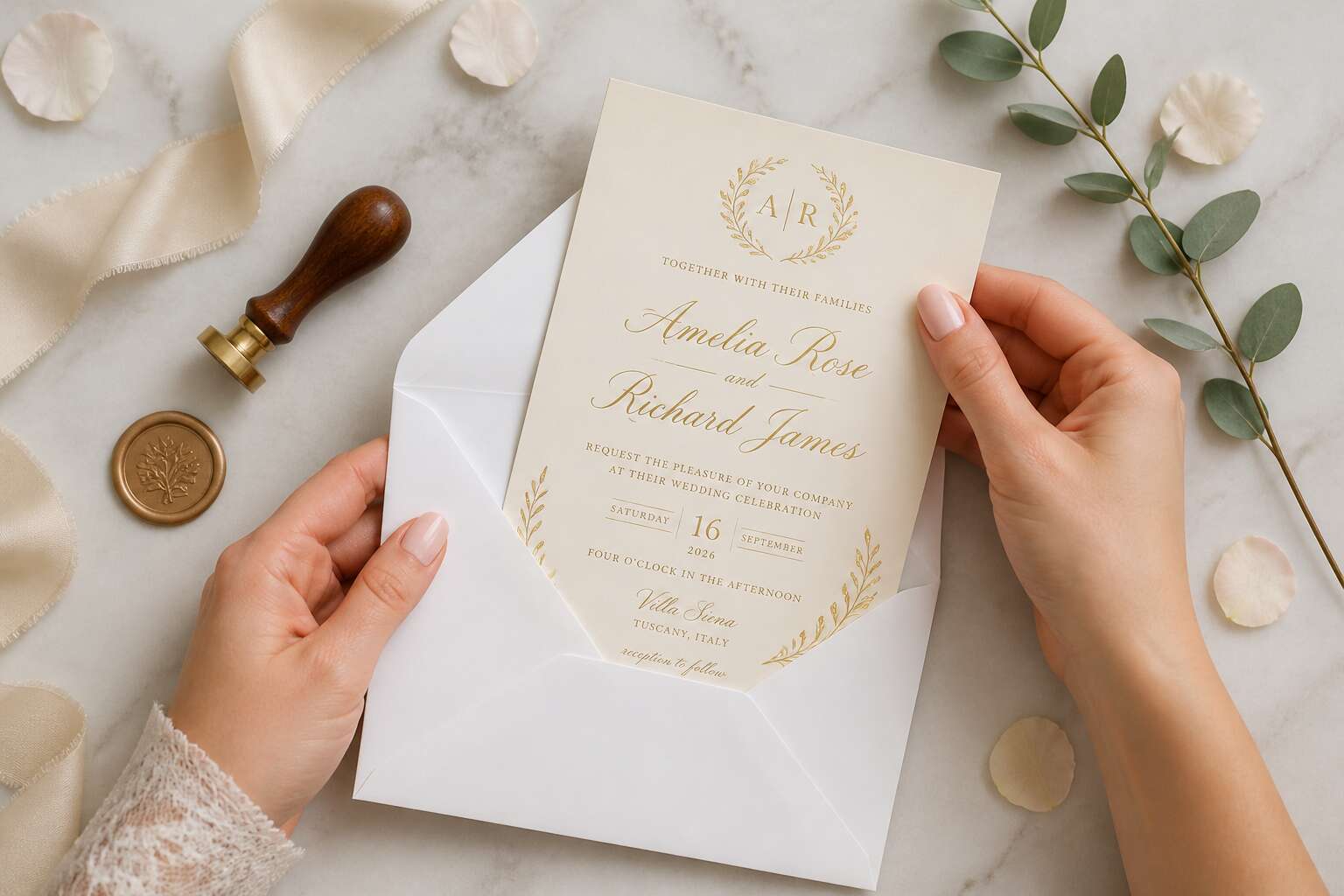
Choosing the Perfect Wedding Invitation Style
Traditional vs. Modern Aesthetic
Thirty seconds is all a guest needs to judge your wedding’s formality. That brief glance at your wedding invitation card create choices, the paper weight, the font style, the colour story, determines whether they plan for a ballgown or a sundress. I have watched couples struggle between the calligraphy of their grandmothers and the clean sans-serif of their daily lives. Both paths carry merit.
Traditional styles rely on thick cotton stock, wax seals, and muted palettes. Modern designs favour sustainable materials, asymmetric layouts, and bold typography. The divide matters in South Africa, where wedding seasons stretch from summer gardens to winter vineyards.
- Traditional invitations anticipate formal attire and sit-down dinners.
- Modern invites signal relaxed dress codes and interactive ceremonies.
Your wedding invitation card create process should mirror your venue, your season, and the expectations of your specific guest list. That first tactile impression, whether embossed or flat, sets the rhythm for everything that follows.
Aligning with Your Wedding Theme
Your wedding invitation card create process should follow the venue’s logic, not the other way around. A bushveld ceremony with khaki and leather tones needs textured stock that matches the landscape. An urban loft wedding demands harder materials, maybe recycled pulp with exposed edges. I have seen couples fixate on a single hue and miss the rest of the sensory detail. The invitation is a tactile preview, so match it to your theme directly!
If you are planning a coastal wedding, choose water-resistant paper and wave-like fonts. For a highveld winter wedding, select a heavy card weight that holds warmth. The physical properties carry meaning:
- Paper thickness signals durability.
- Font curvature suggests movement.
- Envelope colour sets the mood.
These connections make the invitation feel inseparable from the wedding itself.
Seasonal Color Palettes and Textures
South African seasons do not follow the European calendar, and your wedding invitation card create process should respect that. A Cape Town autumn wedding in April calls for deep burgundy and ochre textures, while a July Highveld wedding needs the crispness of winter whites with silver foil. The material choices shift with the light. Summer weddings along the Garden Route benefit from matte finishes that do not glare in bright sun. Winter weddings in the Karoo invite heavier, ribbed cotton papers with a substantial hand-feel.
Consider the seasonal palette:
– Autumn: burnt orange, dried wheat, charcoal
– Winter: icy blues, slate grey, cream
– Spring: soft peach, sage green, butter yellow
– Summer: coral, aqua, sunny yellow
Texture follows climate. Humid coastal air ruins delicate lace paper, so choose a sturdy linen blend instead. Dry inland winters crack thin card stock, so opt for a thicker, mould-made sheet. When you wedding invitation card create with the season in mind, the stationery matches the day itself.
Selecting Paper Stock and Finishes
A single invitation holds more weight than any other piece of wedding stationery. It arrives in the post, carries your names, and sets a physical memory. When you wedding invitation card create, the style you choose speaks before the words do. Flat, letterpressed, or laser cut, each approach changes how light and shadow interact with the page. Paper stock deserves full attention. A thick cotton board offers soft resilience, while a smooth coated sheet gives a polished surface. For outdoor ceremonies, choose matte to avoid glare. I have yet to meet a couple who regrets a heavier stock.
- Textured stock: best for rustic themes
- Smooth stock: suits minimalist layouts
- Recycled stock: adds earthy charm
Finishes like foil stamping add metallic gleam, and embossing creates subtle depth. Keep the finish secondary to the paper itself. The right pairing makes the card feel inevitable.
Essential Components of a Wedding Invitation Suite
The Main Invitation Card
The main invitation card is the primary document in your wedding invitation card create. Guests see it first and rely on it for every practical detail. In South Africa, where weddings often include multiple events and extended family, a precise main card prevents miscommunication.
Your main invitation card must carry these essentials:
- The full names of both hosts and the couple
- The date and start time, written out in full
- The complete venue address with a landmark or map link
- A dress code that respects cultural expectations
- The RSVP date and a contact number or email
Each line serves a distinct purpose. When you leave out the dress code or the exact location, you create confusion. That is why the main card holds the most responsibility. Keep it readable and direct. No guest should have to guess what happens next.
RSVP Card and Return Envelope
The RSVP card and its return envelope serve as the first exchange between you and your guests. In South Africa, where postal delays are a known hazard, a return envelope with your address preprinted and the correct postage saves everyone frustration.
Print the guest’s name on the RSVP line, not an empty ‘M’ for guests to fill in. This subtle move prevents confusion, particularly when extended families share one surname. Keep your requests precise:
- Meal choices or dietary restrictions
- Number attending from each household
- Response deadline, at least three weeks before the wedding
The return envelope should be self-addressed and stamped. Forgetting this detail means guests must locate a stamp, which many will quietly avoid. Your overall wedding invitation card create depends on this small piece, because an unreturned RSVP disrupts seating charts and catering counts.
Additional Inserts and Reception Details
“Where exactly is the reception?” is the question no couple wants to hear. The reception details card carries the practical facts: venue address, time, dress code, and directions. In South Africa, a wine estate venue might need a gravel-road warning. Your wedding invitation card create should treat this card as a core member of the suite.
Additional inserts handle what the invitation cannot. Accommodation lists for out-of-town guests, transport schedules, and gift registry information belong here. A thoughtful wedding invitation card create considers what guests need on the day. I have seen guests circle a vineyard over a missing map. Useful additions include:
- A map or written directions for rural venues
- Suggested accommodation with booking deadlines
- A note on the dress code, phrased politely
Each insert serves a purpose. The reception details card sets expectations. The extra inserts save guests from guesswork. A well organised suite reflects well on you.
Wording Etiquette and Phrasing
The essential components of a wedding invitation suite fit together as one unit. Each piece answers a question before it is asked. The main card names the who, what, and where. The RSVP card requests a reply. The reception card guides the guest from ceremony to celebration. When you wedding invitation card create, you arrange these parts in a logical order.
Wording etiquette matters. The host line sets the tone. “Together with their families” carries a specific meaning. “Mr and Mrs John Smith request the pleasure” is formal. “We invite you” is modern. Choose one voice and hold it across every card!
- Use full names and proper titles on the main card
- Spell out dates and times to avoid confusion
- Keep the RSVP deadline clear and prominent
Phrasing should match your venue and theme. A vineyard wedding in Stellenbosch suits relaxed language. A city hall ceremony calls for formality. The way you wedding invitation card create shapes guest expectations before the event itself.
Step-by-Step Guide to Designing Your Own Invitations
Setting a Realistic Budget
A realistic budget often shapes the outcome of your wedding invitation card create. In South Africa, couples spend roughly R2,500 on stationery, a figure that surprises many. Start by listing every physical piece you need, from the main card to the RSVP envelope.
- Decide on a printing method based on your skill level.
- Draft a simple layout using free software.
- Print a single test copy to check colours.
- Calculate the final cost per invitation.
Setting a budget means accounting for hidden expenses like wax seals or custom stamps. I always advise adding a 10% buffer for mistakes. That small margin protects your wallet and your sanity.
Finding Design Inspiration and Templates
The sheer volume of design options can feel paralyzing. This is where methodical research becomes your best friend. Begin by collecting physical samples from local print shops and online marketplaces tailored to the South African market. This fieldwork gives you a tangible sense of texture and weight that screens cannot convey.
After your initial exploration, pivot to digital platforms for targeted inspiration. Search for colour palettes and typography trends that resonate with your wedding’s location, whether it is a Cape Winelands estate or a Durban beachfront venue. Look specifically for layouts that complement the printing method you selected during your budget planning.
When you find a template that almost works, consider its potential for customisation. A good template serves as a scaffolding for your unique details. You can swap fonts, alter the border, or change the backing card, but the structural integrity remains. This hybrid approach saves time while ensuring your wedding invitation card create process remains distinctly personal. Many successful designs begin as a simple adaptation of a classic framework, not a complete invention. Trust your collected references. Your eye will guide you to the perfect foundation for the final piece.
Choosing Typography and Color Schemes
Begin with typography, as it sets the emotional tone. Choose two families maximum: one for headings, another for body text. Serif fonts evoke heritage, while sans-serif offers clarity. Test readability at actual print size before committing to any style.
Next, build your colour scheme around the venue’s natural light. A Cape Winelands estate calls for earthy terracotta and burnt orange. For a beachfront celebration, consider aqua and soft coral. Use a 60-30-10 rule to distribute hues across the card surface. I rely on this ratio for every design.
- Define your primary typeface first
- Select accent colours from your theme
- Print a test copy to verify contrast
This methodical approach ensures your wedding invitation card create process remains intentional. Each choice reinforces the story you wish to tell and prepares guests for the event’s character.
Structuring Layout and Visual Hierarchy
Structure your layout with a clear focal point. The couple’s names anchor the eye, while date and venue follow in descending importance. White space guides attention better than decorative clutter. A grid system keeps elements aligned without feeling rigid. For a Cape Town vineyard wedding, an asymmetrical balance mirrors the mountain lines. I often start with a thumbnail sketch, mapping the journey the eye takes across the card.
The visual hierarchy reflects your priorities:
- Couple’s names
- Date and time
- Venue
- Reception details
Guests absorb information in the order you intend. Every design choice serves the larger goal of wedding invitation card create. When layout and hierarchy align, the result feels effortless, though carefully engineered!
Home Printing Techniques and Professional Alternatives
Designing your own wedding invitation card create process begins with a clear sequence. First, settle on your paper size and print method. A4 stock cut to A5 works well for home printers. Next, set up your file with proper bleed and margins. Most home printers cannot print edge to edge, so leave a 3mm border. Test on plain paper before using your final card stock. Adjust the colour profile to match your printer, and always check the back of the sheet for smudging!
For a polished finish, consider these home printing techniques:
- Use a laser printer for crisp text and faster drying.
- Choose a paper weight between 250 and 300 gsm for stability.
- Print a single test page and check alignment.
Professional alternatives offer higher quality. A local print shop in Cape Town can handle foil stamping or letterpress. Digital printing is cost effective for small quantities. You can also order from online vendors that specialise in wedding invitation card create. Compare samples before committing to a full run.
Proofreading and Test Printing
One misplaced digit on a date can unravel months of planning. Proofreading demands fresh eyes. Read every line aloud, from the couple’s names to the RSVP deadline. Check the spelling of the venue and the accuracy of the time. A single letter swapped in an email address will send replies nowhere.
Test printing is equally vital. Load plain paper first and inspect the alignment. Then switch to your final card stock. Verify that the ink dries without smudging and that the colours match your screen. Run a second test with the actual envelope to confirm the size.
The wedding invitation card create process benefits from these small checks. They save you from costly reprints and wasted hours.
Creative Personalization and Unique Embellishments
Monograms, Crests, and Custom Illustrations
In a land where ancestral echoes still rustle through modern celebrations, the wedding invitation card create becomes a ritual of permanence. Monograms, pressed into translucent vellum, offer a surname that outlasts the ceremony. Crests carry the weight of lineage, anchoring your union to a symbolic heritage.
Custom illustrations conjure the spirit of your locale. A lone acacia against a Karoo sunset, the Cape’s granite cliffs, a vineyard row in Stellenbosch. These images fix your celebration in place and time.
The details you choose are never mere ornament. They speak of origins and intentions. For those drawn to the unusual, consider adding:
- An interlocked cipher that only your two names can claim
- A floral crown of fynbos, drawn by hand
- The silhouette of a koppie where you fell in love
Each mark connects the recipient to your narrative without a single word.
Foil Stamping and Letterpress Effects
Foil stamping and letterpress transform a wedding invitation card create from a flat announcement into a textured artefact. Metallic pigments pressed into cotton paper catch the light at every angle. Letterpress leaves an indentation you can feel with your fingertip, a tactile trace of each word.
Some couples layer both techniques for depth:
- Rose gold foil over charcoal ink
- Blind debossed borders framing a central emblem
- Two-tone foil blocks that shift hue in changing light
These finishes cost more than digital printing. I have found they reward the hand that holds them. Printers in Johannesburg and Cape Town offer both methods, though letterpress demands thicker stock. When you choose foil, the invitation becomes a keepsake rather than a notice. The shine softens over the years. The embossed impression remains, and that permanence is the point!
Wax Seals, Ribbons, and Belly Bands
The moment a guest breaks a wax seal begins the ritual. That small crack of resin, the slide of a ribbon, the unclasp of a belly band. Each layer draws the reader closer to your words. I have seen couples use a deep emerald seal against a cream envelope for a winter wedding in the Winelands. Others prefer a simple linen ribbon around a textured card. Some options to consider:
– Flattened wax seals in a metallic pigment
– Silk ribbons paired with a matching belly band
– Twine wrapped with a sprig of dried lavender
A wedding invitation card create is an experience from the mailbox to the mantelpiece. Choose finishes that survive the journey. Ribbons should tie flat to avoid postal damage. Belly bands hold loose inserts in place. These details reward the patience of your guests.
Eco-Friendly and Sustainable Design Options
The invitation’s job does not end at the envelope. A custom liner featuring your favourite local fynbos sketch, or a handwritten note tucked inside the flap, adds a layer of intimacy that mass produced cards lack. These personal touches show you considered the recipient, not just the stationery budget.
Sustainability offers its own creative path. Recycled cotton paper, seed paper inserts, and soy based inks reduce environmental impact without sacrificing quality. Consider these options for an eco conscious approach:
– Sugarcane waste paper with a natural texture
– Plantable wildflower seed cards for the RSVP
– Digital response options to cut postal waste
South African couples increasingly choose local, ethical suppliers for their materials. When you wedding invitation card create with these elements, you support smaller businesses and lower your carbon footprint. Your guests receive a keepsake that respects the planet. A seed card that becomes a protea plant is a far better memory than a discarded envelope.
Frequent Pitfalls to Avoid During the Creation Process
Overlooking Spelling and Grammar Accuracy
Overlooking spelling and grammar accuracy turns a beautiful invitation into an embarrassment. I have seen couples spend weeks on design, then ruin the impact with a misplaced apostrophe. Your wedding invitation card create demands the same scrutiny as paper stock or foil stamping. A single typo in the date or time can send guests to the wrong venue on the wrong day.
Read every word in reverse order to catch hidden mistakes. Do not rely on autocorrect, it misses context. Common traps include:
- Confusing homophones like “ceremony” and “site”
- Incorrect punctuation in the address lines
- Inconsistent spelling of names, especially Afrikaans or Zulu names
Proofread after printing a sample, not before. The tactile result reveals errors a screen hides.
Choosing the Wrong Paper Weight for Mailing
One heavy card can add R15 to your postage costs. The wedding invitation card create process often ignores mailing weight until the final shock. A 300gsm stock with a wax seal feels premium, but it may fail the postal machine’s flex test. Standard envelopes accommodate thicknesses. Oversized cards get hand-cancelled, which delays delivery and increases fees.
I have watched couples redesign entire suites after a post office rejection. To avoid this, check these variables:
- Maximum weight for a standard stamp in your region
- Envelope size limits for automated sorting
- Rigidity of the card and its inserts
Use a postal scale on a fully assembled sample. A lighter card, around 240gsm, with a separate liner can preserve texture and fit within mail requirements. Always factor in reply cards and belly bands. The creation process should include a mailing test before you print the full order. That test prevents a costly error!
Misjudging Printing Timelines and Postage Requirements
Most couples underestimate the production cycle by at least three weeks. That gap becomes expensive when the wedding invitation card create process collides with postal deadlines. I have seen beautiful suites miss a wedding date because the printing queue stretched past the courier’s last guaranteed delivery day.
Here is the calculation most people skip:
- Production time, including drying for specialty inks.
- Addressing and assembly time.
- Postal transit time with a buffer for sorting delays.
Each step must finish before your RSVP date. The post office in South Africa does not rush for anyone. A hand-cancelled envelope takes longer than a machine sorted one. The printing timeline and the postage requirement are two separate clocks, and both run against you!
Cluttering the Design with Excessive Information
The urge to include every detail about your big day is a quiet form of anxiety. You fear that omitting something will cause confusion. The opposite is true. Clutter creates its own confusion.
When you set out to wedding invitation card create, each element competes for attention. The more you add, the less any single piece matters. I have seen invitations with five fonts, three borders, and a map on the back. The result was not informative. It was exhausting.
Consider what truly belongs:
- The names of the couple
- The date and time
- The venue
- RSVP details
The details that do not fit here have other homes. A cluttered design does not show care. It shows indecision. The reader should know exactly what you are asking within five seconds. If they have to hunt for the date, you have already failed them.
Forgetting Spare Invitations and Extra Supplies
You order 100 invitations for 100 guests. The post office loses three. Two arrive damaged. One couple moved without updating their address. Suddenly you are short by six, with no time to reorder.
This is the quiet trap hidden in the wedding invitation card create process. Spares feel like waste until you need them, and I have watched couples beg for a rush reprint. Order at least 10 percent extra, plus a handful of matching envelopes!
Extra supplies matter too. When you set out to wedding invitation card create, assembly consumes more than you expect:
- Backup adhesive and glue dots
- Spare ribbon or twine
- Extra wax seal supplies
- A second printer ink cartridge
You will finish one batch and discover the glue stick is empty or the ink has run out. Keep backups close at hand. Couples who plan for mishaps never explain a shortage.

0 Comments