The Core Principles of Wedding Invitation Etiquette
Why Etiquette Matters for Your Invitations
What is wedding invitation etiquette, really? I would argue the answer is hospitality. It is the set of conventions that guides your guests from the moment they hold your card. The core principles are clarity, accuracy, and respect. When these three elements align, your invitation fulfills its purpose.
Consider the guest who must arrange travel from Cape Town to the Winelands. Every detail matters!
- The date must be unmistakable
- The venue must be precise
- The RSVP deadline must be unambiguous
This is why etiquette matters. It protects your guests from confusion and prevents awkward follow-up messages. Getting this right means your celebration begins smoothly.
The Anatomy of a Proper Wedding Invitation
I still remember an invitation with a typo in the date. The couple wrote “14th” when they meant “15th,” and three guests nearly booked the wrong weekend. That is why what is wedding invitation etiquette rests on small details that carry real weight.
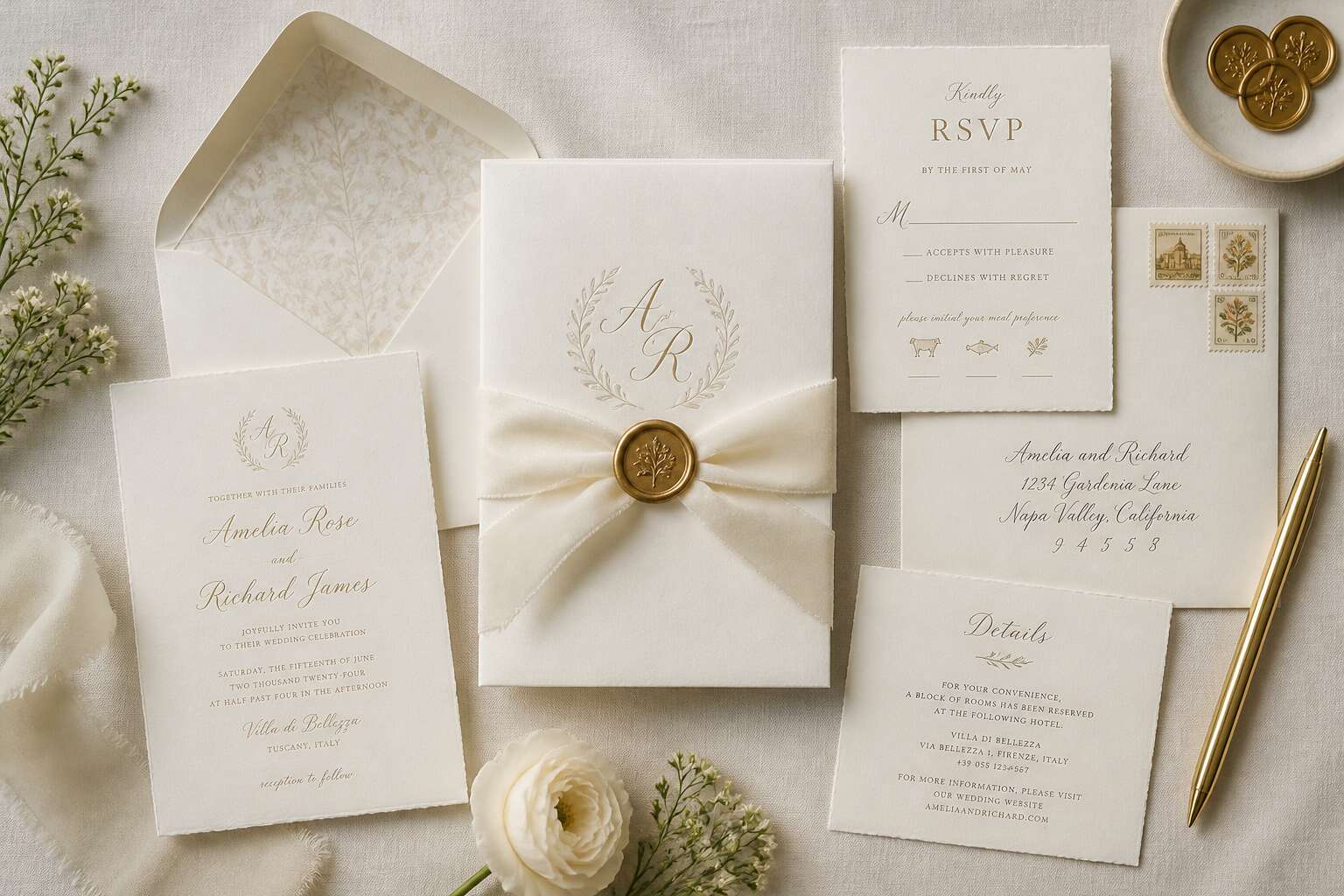
The anatomy of a proper wedding invitation follows a clear order:
- Hosts’ names open the card
- A formal request to attend follows
- The couple’s names hold the centre
- Date and time written out in full
- Venue address and RSVP details close it
Each component works with the next. The core principles of wedding invitation etiquette ask you to keep that order consistent. Match your wording to the formality of the day, whether the reception fills a Cape Town ballroom or a Winelands barn. Spelling mistakes, broken map links, and missing dietary notes on the reply card all undermine that sense of welcome.
Those small acts of attention tell your guests they are welcome. That is what wedding invitation etiquette means in practice.
Common Mistakes to Avoid
What is wedding invitation etiquette? It means treating your guest list like a contract. I have witnessed invitations with missing plus-ones and vague dress codes. Those oversights breed confusion. Core principles are simple: state the date clearly, name the hosts, and give a firm RSVP deadline.
Common mistakes? Overloading the card with QR codes that break, or using “black tie optional” when the venue is a garden. Also, forgetting to specify children policy. That leads to surprise little guests.
- Spell out the date fully, never “12/8” (is it December or August?).
- List accommodation info separately, not on the main card.
- Confirm dietary options on the reply card.
Each error chips away at your guests’ confidence. Understanding what is wedding invitation etiquette prevents those cracks.
Balancing Tradition with Modern Preferences
The core of what is wedding invitation etiquette is respect, not rigidity. In South Africa, that means keeping the printed invitation formal while embracing digital replies for guests who live on their phones. The date is spelled out, the hosts are named, and the RSVP date is firm. The delivery method can shift without breaking the protocol.
I have seen couples balance tradition with modern preference by following a simple rule: the card stays classic, the process goes digital. Here is the structure that works:
- Send a physical card to elders; a clean digital version works for the rest.
- Keep the main card minimal and place accommodation details on a separate insert.
- Respect local customs, from isiXhosa phrases to braai attire notes, in a way that feels natural.
That, in practice, is what is wedding invitation etiquette. It acknowledges the past and the present without letting either overshadow the guest’s experience!
Timing and Mailing Etiquette for Wedding Invitations
When to Send Save-the-Dates
Send save-the-dates six to eight months before your wedding day. For destination celebrations, extend that window to ten months. This early notification gives guests time to arrange leave from work and secure flights. The invitations themselves follow a separate schedule. Mailing them four to six weeks before the ceremony remains standard, though six to eight weeks is wiser for winter weddings or long-weekend dates. South African postal delays are a real consideration, so never assume overnight delivery! I always advise clients to subtract a week from their ideal receipt date to account for courier unpredictability. The true measure of what is wedding invitation etiquette lies in this chronology. Guests should receive their invitations with enough time to respond without feeling rushed. A well-timed envelope reflects the care you put into the entire occasion. Here is a simple timeline to remember:
- Save-the-dates: six to eight months ahead
- Invitations: six to eight weeks ahead
- RSVP deadline: three to four weeks before the wedding
This sequence ensures every guest feels considered.
The Ideal Mailing Window for Invitations
The postmark is the first handshake. Timing charts, response cards, and sumptuous paper all mean nothing if the envelope lands on a doormat too late for a guest to make arrangements. The question of what is wedding invitation etiquette often begins and ends with this practical cornerstone. A standard invitation mailing window sits between six and eight weeks before the ceremony. This is a sweet spot, allowing for a considered reply without the pressure of a looming deadline. Winter weddings or dates that fall on a long weekend deserve the longer end of that spectrum. Local realities also play a role; the South African postal service has a charming disregard for schedules. I always recommend subtracting a week from your target date to absorb courier unpredictability. The etiquette here is simple. Your guests need to feel they have the time to respond, and the invitation itself must arrive with enough lead time for them to act. A quick reference timeline for the entire process:
1. Save-the-dates: six to eight months ahead
2. Invitations: six to eight weeks ahead
3. RSVP deadline: three to four weeks before the wedding
This sequence ensures that every guest considers the event an honour, rather than a logistical scramble. Treating the mailing window with this precision is a quiet signal of respect, something no printed flourish can substitute.
How to Handle RSVP Deadlines
Few questions test a host’s composure like the silent RSVP. You wait. You refresh the tracking spreadsheet. You wonder if a gentle nudge counts as harassment! This is where what is wedding invitation etiquette shifts from paper decisions to people management.
Set your RSVP deadline three to four weeks before the ceremony. That buffer protects your final numbers. My own process involves a three tier chase:
- One polite reminder at the deadline, framed as excitement for their presence.
- A second, more direct call seven days later.
- A final courtesy call for anyone still unaccounted for.
Guests who ignore every cue lose the right to be surprised when the seating chart moves on.
Addressing Guests Who Live Abroad
Understanding what is wedding invitation etiquette grows more complex when your guest lives in another hemisphere. Add two weeks to your standard mailing schedule for every overseas address! A guest in London might receive your invite in five days, but someone in rural KwaZulu-Natal could wait a month. Track the shipment and follow up with a digital scan of the invitation to bridge the gap.
I always print extra envelopes for international guests, using their local format. Address them carefully, as South African post offices have specific rules for foreign mail. And remember, the reply deadline must accommodate their return journey as well. Their RSVP card will need a prepaid international response envelope, or you risk losing them in transit.
Postage and Return Address Considerations
One in five wedding invitations never reach their intended recipient due to insufficient postage or incorrect addressing. That statistic should make any couple pause before licking a single envelope. What is wedding invitation etiquette if not the practice of ensuring your carefully chosen words actually arrive? The postal service moves in mysterious ways, and your beautifully crafted suite is subject to the same delays and mishaps as any bill or magazine.
Postage demands more calculation than a simple trip to the post office. The weight of your card stock, the number of enclosures, and the peculiar dimensions of your envelope all influence the cost. A standard rectangular invitation with a response card and envelope might require two stamps, while a square design could need three. I always recommend visiting the post office with a fully assembled suite before committing to a specific stamp quantity. The counter clerk can weigh your creation and advise on the exact postage required, sparing you the embarrassment of invitations returned to sender.
Your return address serves as the safety net for every uncertain delivery. Printed neatly on the back flap or embossed on the envelope’s inner lining, this small detail carries significant weight. What is wedding invitation etiquette without a reliable return address? It is a gamble where your guests’ absence becomes your consequence. I have seen couples lose track of entire tables of guests because they used a temporary address or forgot to include their apartment number. The return address also announces your presence before the recipient even opens the envelope, adding a touch of ceremony to the unwrapping.
The assembly of each invitation matters more than most couples realise. Your response envelope requires the same careful postage calculation as the main invitation. A prepaid response envelope with insufficient postage creates an awkward burden for your guest. For local deliveries, a standard stamp usually suffices, but for distant provinces, consider the distance your reply must travel. The sequence of layers, from the outer envelope to the tissue paper to the inner envelope, each component adds weight and requires consideration.
Timing your mailing with precision elevates your entire invitation experience. The standard advice suggests sending invitations six to eight weeks before the wedding date. Yet what is wedding invitation etiquette for those celebrating during peak postal seasons? Festive periods can extend delivery times by weeks, not days. I suggest adding a buffer of at least two weeks to your timeline if your wedding falls near major holidays. The cost of a slightly early delivery pales in comparison to the anxiety of guests who never receive their invitations.
Consider the practical realities of your guest list before finalising your postage strategy. A large wedding with two hundred guests requires significant investment in stamps alone. I have seen couples trim their guest list simply to reduce the postage burden, though that seems a rather anticlimactic reason to uninvite a beloved cousin. Instead, budget for postage as part of your overall stationery costs from the beginning. The return on this investment is measured in happy, present guests who feel honoured by your attention to detail.
How to Word Your Wedding Invitations Correctly
Formal Wording Guidelines for Host Lines
Understanding what is wedding invitation etiquette starts with the host line. This line tells guests who is issuing the invitation. Formal wording usually names the bride’s parents first. If both families contribute, you can list both sets of parents. Keep names and titles exact.
For a modern twist, you might use “Together with their families” instead of traditional phrasing. That works well for couples hosting themselves. You can also include stepparents or grandparents when appropriate. The key is clarity!
- Mr. and Mrs. Sipho Dlamini request the honour of your presence.
- Together with their parents, Naledi and Thabo Molefe invite you.
These examples show how wording sets the tone. Without a proper host line, the invitation loses its formal anchor. It is a small detail that shows respect.
How to List Parents, Stepparents, and Blended Families
Blended families make wording invitations a delicate negotiation. You want everyone honoured without a long list of names. The rule: use full names and clear relationships, but keep the host line manageable. What is wedding invitation etiquette here? Balancing recognition with readability.
When both biological parents and stepparents are involved, consider who is hosting. If a stepparent contributes, they should appear. If not, leave them out! “Mr. John Smith and Ms. Jane Doe, together with their partners, invite you…” Or list the parents who raised the couple.
- Bride’s parents first, then stepparents
- Alphabetical order for all parents
- Hosts’ names only, separate reception card
Guests need to know who is hosting, but not every family branch. Ask the couple what feels fair, then keep the wording consistent. That is what is wedding invitation etiquette in a blended family context.
Invitation Etiquette for Second Weddings and Elopements
Couples marrying for the second time can shed the shackles of strict protocol. The cardinal question of what is wedding invitation etiquette for a repeat ceremony often hinges on tone, not tradition. A formal, white-tie affair still demands full names and a formal host line. However, a relaxed garden party invites a warmer, simpler phrase.
The most liberating shift is the host line. Historically, the bride’s parents issued the invitation. For a second wedding, the couple often hosts themselves. The wording becomes a graceful, declarative statement: “Together with their children, Sarah Mitchell and David Chen request the pleasure of your company.” This immediately clarifies the relationship and the event’s intimacy.
Children from previous marriages frequently appear on these invitations. Their inclusion is a poignant symbol of the new family unit. The etiquette is to list their names clearly but simply, typically below the couple’s names.
Perhaps the most crucial points for modern second weddings are these:
– Omit the groom’s parents if they are not contributing financially.
– Use casual terms like “join us” for less formal ceremonies.
– Skip the “honour of your presence” phrase, which is reserved for religious venues.
When a couple chooses to elope, the traditional invitation becomes an announcement. These cards arrive after the fact, celebrating the union. The wording should be a joyful, present-tense proclamation. Try: “Sarah Mitchell and David Chen, married on the 15th of March, invite you to celebrate their union.”
Alternatively, a hybrid approach is charming. Send a “save the date” card beforehand, hinting at a possible celebration. Then follow with an invitation to a post-elopement reception. The announcement itself should be brief, focusing on the shared joy. This approach makes the etiquette about clarity and expedience. Guests simply need the facts of the marriage and the celebration details. Ultimately, what is wedding invitation etiquette for these occasions is a measure of honesty and warmth, delivered without the weight of outdated obligations.
Choosing the Right Language for Adults-Only or Child-Free Weddings
The phrase “adults-only” is a powder keg wrapped in a wedding invitation. You want the idea of a sophisticated soirée, not the reality of a toddler throwing a tantrum during your first dance. The key to navigating this minefield is tone, and it hinges entirely on what is wedding invitation etiquette for this modern predicament. Forget the stuffy, formal directives of yesteryear. The insider secret is to address the envelope to the adults by name only. If you invite “The Van Wyk Family,” you are inviting the children. It is that simple.
The harsh, accusatory line of “No Children” is a guest list massacre. A far more diplomatic approach involves stating the sentiment with a wink. The wording on your details card can be playful yet firm, indicating that the celebration is for grown-ups only. But beware, the internet is rife with linguistic landmines.
– Never write “No Kids,” which sounds like a decree.
– Do not reference “adult beverages” as the primary incentive.
– Avoid blaming the venue; guests see through this instantly.
Instead, try a warm, pre-emptive phrase. Something like, “We hope you will enjoy a well-deserved night out with us” sets the scene without singling anyone out. This is a crucial part of what is wedding invitation etiquette. It allows parents to arrange a babysitter without feeling judged, framing the child-free aspect as a perk, not a punishment.
For a truly subtle approach, you can rely on the hierarchy of the invitation suite itself. The fact that only the parents’ names appear on the outer envelope is a traditional sign. If you want to be explicit, including a simple line on your wedding website, rather than a formal insert, offers the perfect compromise. A frequent lamentation involves the phrasing of “adults only” on the response card. A polite statement like, “We have reserved seating for our adult guests only,” which is clearly stated, prevents most misunderstandings. The real trick is to treat your guests like intelligent adults, which they are, and trust that a gentle, well-worded hint will be received with the grace it intends.
Addressing and Assembling Your Invitation Suite
Outer and Inner Envelope Etiquette
The inner envelope is the ghost of the invitation suite. It lingers in the shadows of its more formal counterpart, yet it carries a distinct purpose. You must first understand what is wedding invitation etiquette regarding this delicate layering. The outer envelope bears the full, official names and the physical address, a matter of public record for the postal service. The inner envelope, however, is a whispered intimacy, meant only for the eyes of the invitee.
Inside this sealed vessel, you have room for a more personal touch. It is proper to include the guests’ titles and surnames, a quiet formality. For immediate family, the use of familiar names is accepted. This inner paper also serves a practical role in what is wedding invitation etiquette, providing a shield for your delicate cardstock against the abuses of transit.
Your assembly should feel like a ritual. Consider this sequence for the inner envelope:
1. Place the main invitation card face up.
2. Nestle the response card and its envelope beneath the invitation’s flap.
3. Include any additional cards, like accommodation details, on top.
The weight of the paper, the order of the sheets, all of it speaks before a single word is read. This entire process, from the choice of the outer shell to the final tuck of the inner sleeve, is a core tenet of what is wedding invitation etiquette. It is a silent language that signals respect for tradition and for your guests. Getting this right ensures the first physical impression of your union is one of considered grace, not chaotic clutter.
How to Address Married, Unmarried, and Unmarried Couples
Manners are a sensitive awareness of the feelings of others, Emily Post wrote. That awareness begins with the names on an envelope. Married couples receive the traditional one-line treatment: Mr. and Mrs. Sipho Nkosi. Unmarried couples require a departure from convention, each name on its own line with a proper title. This is what is wedding invitation etiquette in its most practical form.
For two unmarried people sharing a home, I have watched couples agonise over name order. List them alphabetically or by preference. Clarity matters more than hierarchy. When one partner holds a professional title, such as Dr., that title takes precedence. When both hold the same title, list the older guest first.
A simple sequence helps:
- Write each partner’s full name and title.
- Place the names one per line on the outer envelope.
- Add the street address below the final name.
The result respects both tradition and reality!
Titles, Prefixes, and Professional Degrees
Professional titles require precision. A surgeon’s envelope reads Dr. and Mrs. Thabo Mokoena, while two doctors with different surnames need two lines. When the wife is a doctor, her name goes first: Dr. Lerato Khumalo and Mr. Sipho Khumalo. For academic degrees, use “PhD” only after the name on the inner envelope, not the outer. What is wedding invitation etiquette if not showing respect through exactness?
Assembling the suite also follows a logic. The main invitation rests on top. Below it, the RSVP card, then the reception card, then any accommodation insert. Order matters for a neat reveal. Use this sequence:
- Main invitation
- RSVP card and envelope
- Reception card
- Tissue paper (optional)
Each element aligns with the top left. This structure keeps the suite tidy and your guests informed without confusion.
Proper Assembly Order for Invitation Layers
A wedding invitation suite is a physical puzzle, and the correct sequence matters more than most couples think. What is wedding invitation etiquette? It is the quiet logic that guides how guests receive your news, starting with the assembly line.
The order of layers creates a tidy reveal. Stack them in this sequence:
- Main invitation, face up
- RSVP card with envelope tucked beneath its flap
- Reception card, if you have one
- Tissue paper or accommodation inserts last
Align every item to the top left corner. This prevents shifting in transit and keeps the suite looking deliberate.
The result is a smooth unboxing for guests. They see the important details first, and the secondary cards follow naturally. Etiquette, in this sense, is simply the choreography of paper.
Using Calligraphy and Printed Labels Respectfully
A friend once addressed her wedding envelopes with a Sharpie because her handwriting beat any store-bought label. Guests were charmed. What is wedding invitation etiquette, after all, if not intent? Calligraphy signals an heirloom moment. Printed labels signal efficiency. South African couples can use both without offending anyone, so long as names and titles are exact.
Outer envelopes look best with handwritten full names. Inner envelopes can carry first names only. For RSVP cards, printed labels are perfectly polite, especially once you have typed every address into a spreadsheet.
- Correct surname spelling ranks above perfect penmanship
- A doctorate title appears only when the guest uses it professionally
- The return address sits on the back flap
The ink can be gel, jet, or dip. Courtesy stays the same.
Handling Plus-Ones and Their Names
Handling plus-ones is where invitation etiquette gets personal. A named partner deserves a named envelope, no matter the surname. Use “and Guest” only when you truly don’t know who is coming, and accept the ambiguity with grace.
What is wedding invitation etiquette? It is the art of making each guest feel known. For plus-ones, that means capturing names correctly on the response card. For the couple, it means designing a suite that guides a guest through the day. The assembly order matters less than the logic behind it:
- The invitation leads, since it states the who and when
- The RSVP card follows, so the response is easy to find
- The accommodation insert sits at the back, for logistics only
South African weddings often blend cultures, so leave room for titles the guest prefers. The envelope and the innards must agree on every detail.
RSVP, Registry, and Digital Invitation Etiquette
The Dos and Don’ts of RSVP Cards
RSVP cards tell you who is coming and how many meals to prepare. Clarity beats creativity, every time. Write the reply date and include a pre-addressed, stamped envelope. Make the guest’s name line obvious so people know exactly who is responding. Getting this right is what is wedding invitation etiquette.
Avoid asking for too much information. Meal choices and accommodation details belong on your wedding website, not on the card. For digital invitations, the rules shift. An email invitation requires the same courtesy as a paper one. Reply promptly and stick to the same date.
- Print the recipient’s name on the response line to prevent confusion.
- Keep the card to a single fold-free piece of cardstock.
- Never use a QR code as the only way to respond.
Registry information should never appear on the RSVP card. Mention it on your wedding website. This keeps the focus on the ceremony, not the gifts!
Setting a Clear Response Deadline
Your response date drives the entire planning process. In South Africa, venues and caterers demand final numbers well ahead of the day, so a vague reply deadline causes problems. Name the exact date, not a week or season. Ask for replies by 15 March and repeat that date on your wedding website. State it plainly! Part of what is wedding invitation etiquette is making this deadline explicit.
Follow a simple sequence:
- Choose a cut-off that gives you one full week before your caterer’s final count.
- Print the date on the RSVP card and the digital invite.
- Allow a two day grace period before you chase late replies.
Digital invitations demand the same discipline as paper ones. An email response still needs a firm deadline. Your registry stays on your website, never on the invite itself. This respect for the guest’s time is what is wedding invitation etiquette.
Wedding Registry and Gift-Giving Etiquette
RSVP cards and digital invites share the same obligation. When a guest clicks “accept” on a virtual invitation, the response still carries the full weight of a posted reply. What is wedding invitation etiquette if not a mutual contract of respect? The couple promises clarity, the guest promises punctuality.
Your registry should remain on your wedding website. Never print it on the invitation. Guests who want to search for gifts will find their way, and listing registry details on the invite feels like a request for payment rather than a celebration.
- Choose gifts that reflect your life together, not just trends.
- Include a range of price points so everyone feels comfortable.
- Update the registry before your shower, not after.
Gift giving is a custom, not a bill. The guest gives because they truly wish to honour your marriage. In return, the couple should send a handwritten thank you note, even for digital payments. That gesture completes the circle and defines what is wedding invitation etiquette in any era.
Navigating Online Invitations and E-RSVP
A digital invitation is still an invitation, and the RSVP button carries the same weight as a stamped card. Yes, the interface is faster, but the social contract is identical. Clicking “accept” while mentally keeping your options open is the digital equivalent of losing a reply card. The only thing more awkward than chasing up a guest for an answer is the silence that follows. The couple promised a streamlined process, the guest owes them the courtesy of a decision, made on time.
The registry is a quiet map to your new life, not a toll gate. It belongs on your wedding website, hidden in plain sight for the guests who seek it. Printing the registry on the card is a misstep. It transforms a gesture of goodwill into a statement of expectation. The guest who searches for your list does so from love, and the couple who accepts that gift with a handwritten note, even a digital one, completes the transaction with grace.
Navigating the digital landscape brings its own quirks, from forgotten passwords to accidental double replies. Here are persistent oversights to avoid:
– Leaving phishing links in the email footer.
– Forgetting the final “submit” confirmation step.
– Making the font too small to read on a phone.
– Ignoring time zone differences for the deadline.
The etiquette question remains constant: what is wedding invitation etiquette if not the mutual respect for each other’s time and effort? In a world of instant messaging, the handwritten note still holds the most power. It says you saw the guest, not just the gift. The medium changes, the obligation endures.
Thank-You Note Timelines and Expectations
A wedding invitation is a summons, a formal request that carries the weight of a promise. The RSVP is the echo of that promise, a verbal contract that you will either honour your seat or release it. When the deadline passes and a guest has not replied, their silence leaves the couple in a state of suspense, counting place settings for phantom guests. The etiquette question of what is wedding invitation etiquette often becomes a one-sided conversation. The couple has done their part with a beautiful card, and the guest must close the loop. An unanswered RSVP is not a neutral act; it is a withdrawal from the social bond that the invitation created.
The registry, when handled correctly, acts as a quiet compass for the guest who wishes to give. It is a curated list of items that will form the foundation of your shared home, but it should never be displayed as a demand. Your wedding website is the only place it belongs, a hidden link that guests can find at their own pace. When the registry details print directly on the card, you shift the focus from the celebration to the transaction. The etiquette of giving requires a delicate touch. The guest gives from affection, and the couple acknowledges with a timely thank-you note, which should arrive within three months of the wedding. A delay beyond that window turns gratitude into an afterthought.
For digital invitations, the same rules apply, but the pitfalls are different. The conveniences of technology often lull guests into procrastination. Sending a digital reply requires the same intention as mailing a card. The couple’s phone buzzes with a response, but so does their bank account. The stakes of disorganisation are identical. To maintain proper digital invitation etiquette, you must remain vigilant about the practical details that can swallow a reply. Consider these common failures that break the digital chain:
– Forgetting to include a clear subject line that states the bride and groom’s names.
– Overlooking the mobile view, which truncates the event time or venue address.
– Failing to set a specific time zone for the RSVP deadline, confusing international guests.
– Sending a confirmation email that gets buried in the spam folder.
A thank-you note is a written acknowledgment that the guest exists outside of the gift registry. The timeline for sending it is a measure of your respect. A handwritten card holds a warmth that an email can never replicate, even if it arrives late. The digital world may offer speed, but it does not offer grace. Understanding what is wedding invitation etiquette means recognising that every response, every gift, and every note is a strand in a larger web of mutual respect. The medium changes, but the obligation endures, and the guest who waits for a reply is as patient as the couple who waits for a card.



0 Comments